
 Posted by
 When I decided to become a real estate agent, I thought it would be simple. Take a class, pass a test, start showing houses. I was wrong. The process turned out to be more involved than I expected, but understanding the steps ahead of time saved me from costly delays and unnecessary stress.
The first thing I discovered is that every state has different requirements, but the basic structure remains the same everywhere. Most people complete the entire process in four to six months, though focused students can finish in as little as eight to ten weeks.
Step one: Complete your pre-licensing education
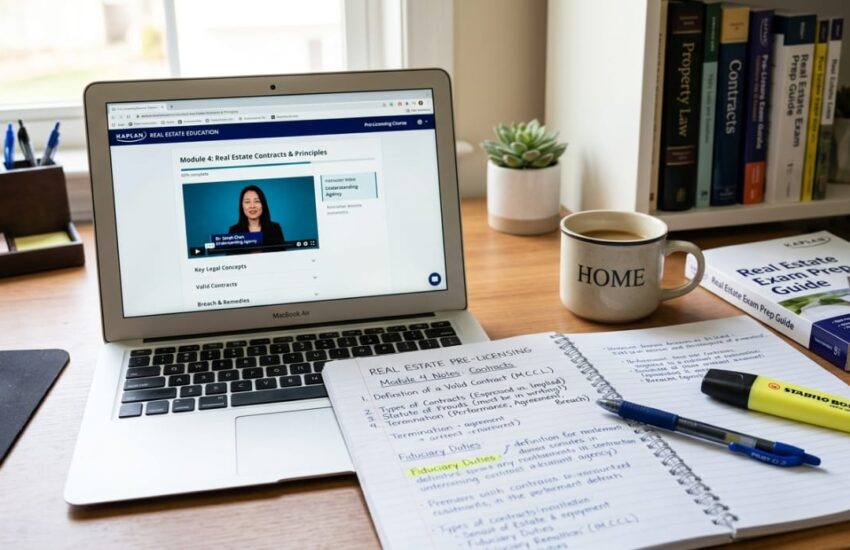
States require anywhere from forty to one hundred eighty hours of coursework. Texas mandates one hundred eighty hours, California requires one hundred thirty-five, and New York requires seventy-five. You have options for how to complete these hours. Online courses offer flexibility, while in-person classes provide face-to-face interaction with instructors. Both formats work as long as the provider is approved by your state’s real estate commission.
The quality of your school matters. I researched pass rates before choosing my provider. In Texas, first-time test takers passed the national portion at about sixty-nine percent and the state portion at only fifty-eight percent. Those numbers told me the exam was no joke.
Step two: Pass the licensing exam
Most states administer a two-part test: a national portion covering general real estate principles and a state-specific portion covering local laws. The national portion covers property characteristics, contracts, financing, real estate practice, disclosures, and math calculations. The state portion covers commission duties, licensing standards, agency requirements, and contract law specific to your state.
I scheduled my exam as soon as I finished my coursework while the material was still fresh. Testing centers typically have appointments within one to two weeks. Exam fees vary by state but typically range from seventy-five to one hundred dollars.
Step three: Complete the background check and submit your application
Almost every state requires a criminal history check, often including FBI fingerprinting. In Oklahoma, applicants must complete a background check through IdentoGO at a cost of sixty dollars. I started this process early to avoid delays. West Virginia requires applicants to be at least eighteen years old, a high school graduate, and “trustworthy, of good moral character”.
Application fees vary. Oklahoma charges thirty-five dollars to apply for a real estate license. Most states process applications within five business days for online submissions.
Step four: Find a sponsoring broker
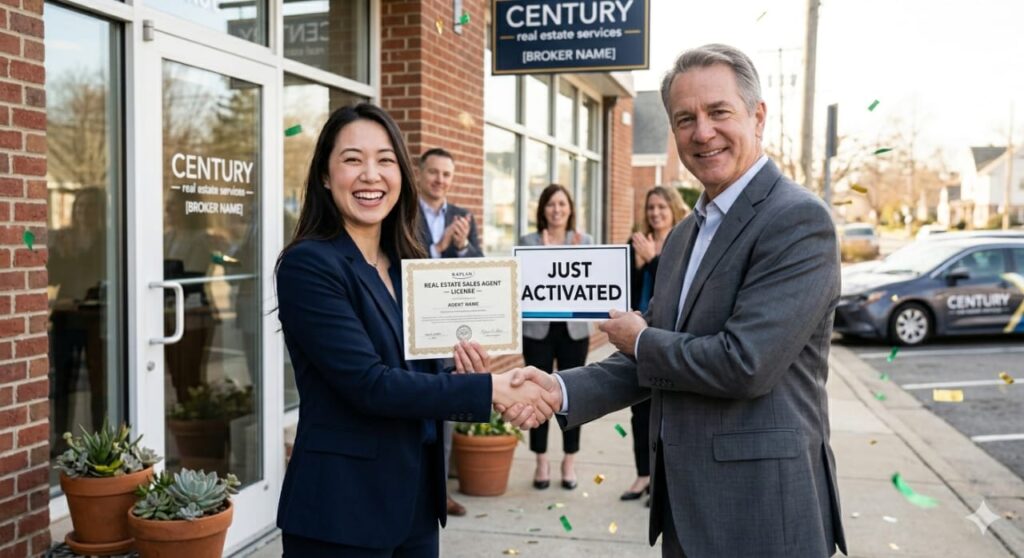
This step surprised me. Your license is not active until a broker agrees to supervise your work. You cannot legally represent clients or earn commissions without an active license under a sponsoring broker. A sponsoring broker is a licensed real estate broker who has extra qualifications and is legally responsible for supervising the agents working under their brokerage.
I interviewed several brokerages before choosing one. Traditional full-service brokerages offer strong mentorship and hands-on training, but they take higher commission splits. Virtual brokerages offer lower fees and more freedom, but they provide limited in-person mentorship. Boutique brokerages offer personalized support and flexible commission plans, but they have fewer resources.
I asked each broker the same questions. What does training look like in the first ninety days? Who reviews my contracts? How quickly can I get help when I need it? How many new agents actually close deals in their first year? The answers helped me separate the brokerages that genuinely supported new agents from those that just wanted another body in the office.
Step five: Activate your license and join the local REALTOR® association
Once you have a sponsoring broker, you can activate your license. You may also choose to become a REALTOR® by joining the National Association of REALTORS®. The main difference is that REALTORS® agree to abide by NAR’s Code of Ethics, which requires them to place the interests of their clients above their own.
To become a REALTOR®, you join your local association, which provides membership to state and national associations. National membership dues were one hundred fifty dollars annually in 2023. What about costs?
Beyond tuition, expect to spend several hundred dollars on exam fees, fingerprinting, application fees, and your first year of errors and omissions insurance. Many new agents underestimate how long it takes to receive their first commission check. There is typically a forty-five to sixty-day lag between putting a property under contract and closing. I made sure I had enough savings to cover my living expenses for at least three months before I started.
Becoming a licensed agent took me about four months from start to finish. It required discipline, studying, and patience with the administrative process. But every time I hand keys to a happy buyer or hand a sold sign to a relieved seller, I remember why I went through all those steps.
There is so much more to learn about launching a successful real estate career. Our website is filled with articles on passing the exam, choosing a brokerage, and building your first client base. Head over and explore, because your new career starts with the right preparation.
References
California Department of Real Estate. (n.d.). *Requirements to apply for a real estate salesperson license*. https://www.dre.ca.gov/examinees/requirementssales.html
California Department of Real Estate. (n.d.). *Steps to becoming a licensed real estate salesperson or broker* [PDF]. https://www.dre.ca.gov/files/pdf/StepstoGetlicensed.pdf
Washington State Department of Labor & Industries. (n.d.). *Get your license: Real estate brokers*. https://dol.wa.gov/professional-licenses/real-estate-brokers/get-your-license-real-estate-brokers
Realtor.com. (2025, January 19). *How to become a real estate agent in 5 steps*. https://www.realtor.com/advice/buy/should-i-become-a-realtor/
Coursera. (2024, November 6). *How to get your real estate agent license*. https://www.coursera.org/articles/real-estate-license