 Posted by
 When my husband and I moved to a new city, we didn’t just need a house. We needed a guide to a whole new world. The neighborhoods were unfamiliar, the market moved differently than what we were used to, and the cultural nuances of home buying felt like a foreign language, literally, because the realtor who came most recommended spoke English as a second language, and we spoke no Spanish at all.
Our first meeting was awkward. We stumbled through pleasantries, relied on lots of pointing at listings, and left wondering if we’d made a terrible mistake. How could we possibly trust someone to handle the biggest purchase of our lives when we could barely understand each other?
Three months later, we closed on a beautiful home, and that realtor had become one of our most trusted advisors. Working across languages taught us things about communication, trust, and the home buying process that we never would have learned otherwise. If you’re facing the prospect of working with a realtor who speaks a different language, here’s what we discovered about making it work, and even thrive.
The first lesson was honesty about the challenge. In that initial meeting, we almost pretended to understand more than we did. It’s a natural impulse, wanting to be polite, not wanting to create difficulty. But our realter, Maria, gently called us on it. “You look confused,” she said, smiling. “Please tell me when you don’t understand. That’s how we learn together.”
That moment broke the ice. We admitted we were lost sometimes. She admitted she sometimes searched for the right English word. We agreed to be patient with each other, to ask questions without embarrassment, to repeat things as needed. That foundation of honesty made everything else possible.
The second strategy was slowing down. In normal conversation, we all speak at a certain pace, assume mutual understanding, move on. With Maria, we learned to build pauses into every conversation. She would explain something, then stop and ask, “Does that make sense?” We would repeat back what we thought we heard, giving her a chance to correct misunderstandings. This felt awkward at first, like we were treating each other like children. But it prevented the kind of assumptions that lead to mistakes.
We also learned to use multiple modes of communication. Spoken words were just one channel. Maria sent follow-up emails summarizing what we’d discussed, which gave us a chance to review and catch anything we’d missed. She used text messages for quick updates, which were easier to process than phone calls. She shared documents with plenty of time for us to read and ask questions before signing. The combination of spoken and written communication created redundancy that caught errors before they became problems.
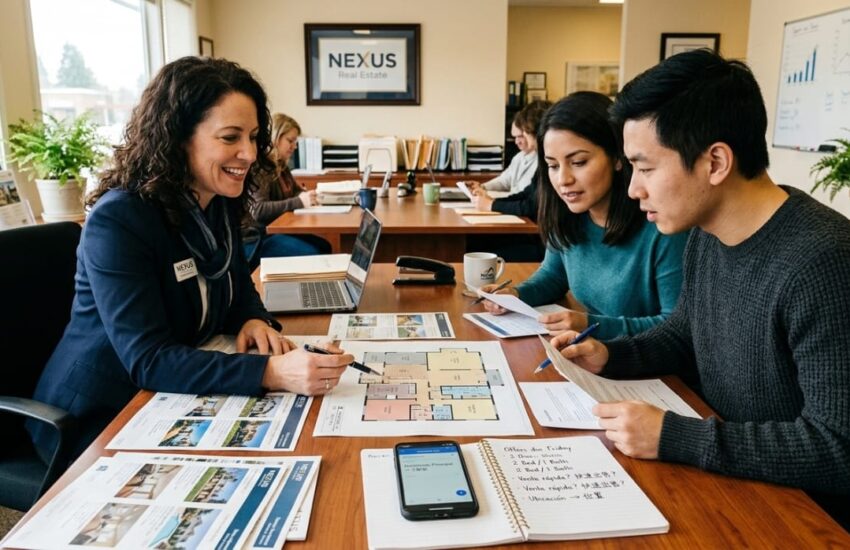
Visual aids became our best friends. When Maria described a property’s layout, she didn’t just use words. She pulled up floor plans, drew diagrams, showed us photos. When she explained market trends, she used charts and graphs. Visual information transcended language barriers and gave us a shared reference point that words alone couldn’t provide.
We also brought our own tools. A translation app on our phones helped with individual words and phrases. We learned key real estate vocabulary in both languages, “escrow,” “contingency,” “closing costs”, which made conversations smoother. We kept a running list of terms we needed to understand and asked Maria to explain them, sometimes multiple times until they stuck.
One of the most important strategies was involving a bilingual friend when it really mattered. For the initial offer, the inspection report review, and the final closing documents, we asked a friend who spoke both languages to join us. Not to take over, but to provide an extra layer of understanding. Maria welcomed this completely. She understood that protecting us meant ensuring we truly understood everything, even if that required extra people in the room.
What surprised me most was how the language barrier actually deepened our relationship. Because we had to work harder to communicate, we paid more attention. We listened more carefully. We asked more questions. We didn’t make assumptions about what the other meant. This level of intentional communication is rare in any relationship, and it built a foundation of trust that might not have existed with a realtor who shared our language perfectly.
Maria brought something else too: access to communities we might have missed. Because she was deeply connected to the Spanish-speaking community in our area, she knew about listings before they hit the mainstream market. She understood neighborhood dynamics that weren’t captured in English-language media. She introduced us to lenders, inspectors, and contractors who also served diverse communities and brought their own perspectives. Her network became our network.
There were definitely moments of frustration. A few times, we misunderstood timing and nearly missed deadlines. Once, we confused two similar-sounding streets and showed up at the wrong property. These mistakes were embarrassing, but they were also learning opportunities. Each time, we adjusted our communication strategies. We started confirming addresses in writing. We double-checked dates and times through multiple channels. We built redundancy into everything.
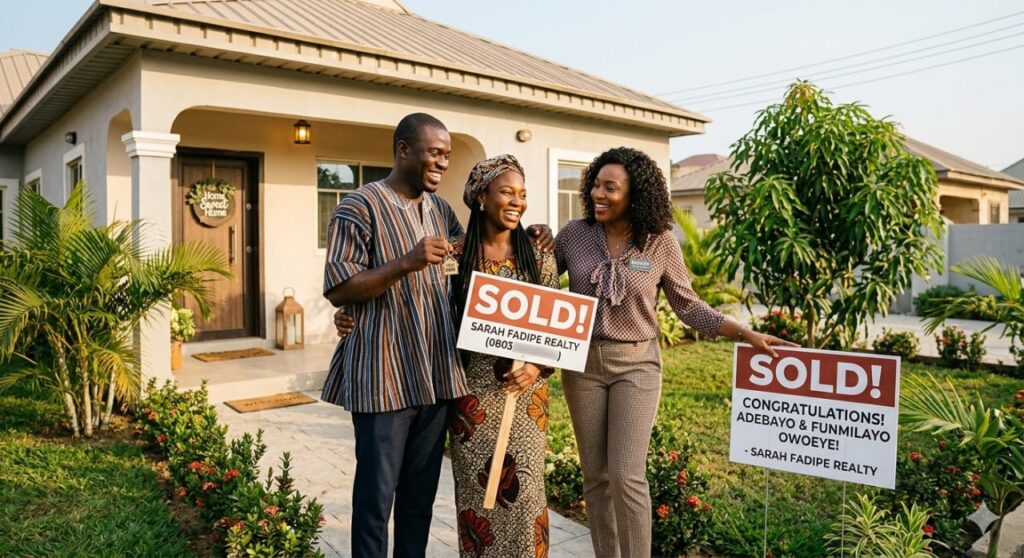
The closing itself was a beautiful moment. Around a conference table sat Maria, our bilingual friend, the seller’s agent, the title company representative, and us. Documents moved back and forth. Explanations were offered in both languages. When we finally signed the last page, Maria hugged us and cried a little. So did I. We had done something hard together, and the difficulty made the success sweeter.
If you’re considering working with a realtor who speaks a different language, here’s what I’d tell you. First, be honest about the challenge from the beginning. Set expectations for slow, patient communication. Second, use multiple channels, spoken, written, visual, to create redundancy. Third, learn key vocabulary and use translation tools. Fourth, don’t hesitate to involve a bilingual friend or family member for critical conversations. Fifth, embrace the opportunity. A realtor from a different linguistic and cultural background brings perspectives and access you won’t get elsewhere.
The home buying process is complicated enough when everyone speaks the same language. Adding a language barrier might seem like making things harder. But what we discovered is that it forced us to communicate more intentionally, to listen more carefully, and to build trust more deliberately than we might have otherwise. Maria wasn’t just our realtor; she became our friend, our guide, our partner in one of life’s biggest decisions. Language differences don’t have to be barriers. They can be bridges, if you’re willing to meet in the middle.
There’s so much more to learn about navigating the real estate process in all its complexity. Our website is filled with articles on working with agents, understanding contracts, and making smart decisions in any market. Head over and explore, because the right home is out there, no matter what language you speak.
References
National Association of Realtors. (2023, September 11). *Relieve confusion for clients who don’t speak English*. REALTOR® Magazine. https://www.nar.realtor/magazine/real-estate-news/law-and-ethics/relieve-confusion-for-clients-who-dont-speak-english
Consumer Financial Protection Bureau. (2026, January 20). *Helping multilingual communities and newcomers*. https://www.consumerfinance.gov/language/
Texas Real Estate Commission. (2025, September 29). *Consumer information* (section on appraisers and agents). https://www.trec.texas.gov/public/consumer-information
Maria Chattra Realtor. (2025, March 9). *How bilingual realtors improve home buying experience*. https://www.mariachattrealtor.com/blog/how-bilingual-realtors-improve-home-buying-experience