
 Posted by
 I grew up in Florida, where basements don’t exist. The ground is too wet, the water table too high, and the concept of a underground room was something I associated exclusively with tornado movies and wealthy characters in Victorian novels.
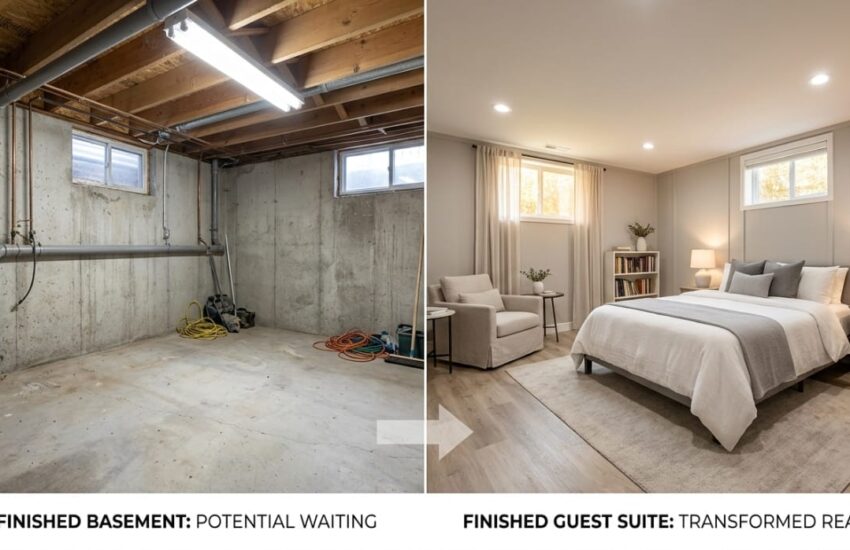
When I moved north as an adult and started house hunting, I walked into my first real basement and literally gasped. It wasn’t finished or fancy, just concrete walls, exposed ductwork, and a lot of empty space, but something clicked in my brain. All this room. All this possibility. All this stuff I could finally store somewhere other than my living room floor.
That moment was the beginning of my education in the benefits of buying a home with a basement or additional storage space. And now, years later, I can’t imagine living any other way. Let me start with the most obvious benefit, the one that sold me immediately: the stuff. We all have stuff. Even minimalists have stuff, they just pretend otherwise.
Bicycles, holiday decorations, luggage, off-season clothing, the boxes from our last move that we swear we’ll unpack someday, the things our children made in kindergarten that we can’t throw away but also can’t display. In apartments and basement-less homes, all this stuff competes for space in your actual living areas. It piles in corners, fills closets to bursting, and creates a constant low-grade anxiety that you’re drowning in your own possessions.
A basement changes that equation entirely. Suddenly, there’s a place for everything. The holiday decorations go in labeled bins on sturdy shelving. The suitcases nest together in a corner. The boxes of memories stack neatly against the wall, out of sight but not discarded. Your living spaces breathe again. You can actually see your dining room table. The garage, if you have one, can finally hold your car instead of becoming a second storage unit.
But the benefits of buying a home with a basement or additional storage space go far beyond simple storage. It’s about flexibility, about the ability to adapt your home to your changing life without moving to a new one. Take my friend Carla, for example. When she and her husband bought their split-level with an unfinished basement, they had no immediate plans for it.
It was just a bonus, a place to store camping gear and old furniture. Then Carla’s mother reached an age where living alone became difficult. Within months, that basement was transformed into a beautiful in-law suite, bedroom, bathroom, small kitchenette, separate entrance. Carla’s mother lived there for five years, close enough for help and company, independent enough for dignity.
Without that space, the options would have been stark: move her mother into a facility or upend the family’s entire lifestyle. The basement made a third path possible. That’s the kind of future-proofing you can’t put a price on.
For other families, that extra space becomes a home gym, a homeschool room, a teenager’s private hangout, a home office that’s actually separate from the chaos of family life. During the pandemic, when the world suddenly needed everyone to work and learn from home, homeowners with basements had options that apartment dwellers could only envy. They closed a door and disappeared into another world, emerging only for meals and sanity checks.
The financial angle matters too. Finished square footage adds value to your home, but even unfinished space adds utility. A basement is cheaper to build than above-ground additions, which means you’re getting more function for less cost. And when you do decide to finish it, you’re adding equity in a way that’s often more affordable than building out or up.
Then there’s the practical stuff that nobody talks about until you need it. Basements house your mechanical systems, furnace, water heater, electrical panel, in a place that’s accessible but out of the way. They provide a place for laundry that isn’t your kitchen or bathroom. They offer refuge during severe weather in areas prone to tornadoes or high winds. In older homes, they often hide the charming original details, exposed stone foundations, old coal chutes, remnants of a different era, that add character you can’t manufacture.
Of course, basements come with their own considerations. Water is the enemy. A basement that leaks or floods is not a benefit; it’s a liability. When you’re house hunting, pay attention to moisture. Look for stains on walls or floors, musty odors, signs of past flooding. Check that gutters direct water away from the foundation. Ask about sump pumps and drainage systems. A dry basement is a gift. A wet one is a money pit.
But assuming the bones are good, the possibilities are endless. I think about my own basement often. It started as storage, evolved into a home gym when I needed to move my body more, then briefly became a guest room when my sister visited for an extended stay.
Now it’s half gym, half workshop, with a corner dedicated to the boxes of my daughter’s artwork that I’ll never throw away but also can’t bear to look at every day. It’s not fancy. The walls are still mostly concrete, the ceiling still exposed. But it’s ours, and it expands our living space by nearly a thousand square feet without expanding our mortgage by a dime.
When friends tell me they’re house hunting and ask what to prioritize, I always ask: does it have a basement? Or an attic with potential? Or a detached garage that could become something more? Space you can grow into, space that adapts, space that holds your life without complaint, that’s the kind of feature that turns a house into a long-term home.
If you’re looking at properties that lack obvious storage, get creative. Could an unfinished attic be floored? Could a garage be partially converted? Could a large closet be reconfigured? Sometimes the potential is hiding in plain sight, waiting for someone with vision to see it.
The benefits of buying a home with a basement or additional storage space aren’t always obvious on the first walkthrough. You might not need that extra room right now. You might not have a plan for it. But life changes. Families grow and shrink. Hobbies come and go. Work evolves. And when those changes happen, having room to maneuver, literally, makes all the difference between stressful upheaval and graceful adaptation.
My Florida-raised self never imagined I’d become such a basement evangelist. But now, I can’t imagine living without one. It’s not just storage. It’s possibility. It’s breathing room. It’s the place where your future self gets to decide what comes next.
If you’re in the middle of house hunting and wondering whether that extra space is worth the investment, take it from someone who learned the hard way: it absolutely is. And if you want more insights on what to look for, what to avoid, and how to make the most of every square foot, our website is full of articles just like this one. Head over and explore, because the more you know before you buy, the better your home will serve you for years to come.
References
Maronda Homes. (2025, September 15). *Why a basement is a smart addition to your new home*. Retrieved from https://www.marondahomes.com/blog/why-a-basement-is-a-smart-addition-to-your-new-home
Reinbrecht Homes. (2023, October 8). *Why having a basement adds value to your home—5 reasons*. Retrieved from https://www.reinbrechthomes.com/blog/why-having-a-basement-adds-value-to-your-home-5-reasons/
Reinbrecht Homes. (2024, June 12). *7 multifunctional benefits of full basements*. Retrieved from https://www.reinbrechthomes.com/blog/seven-benefits-of-full-basements/
Hamlet Homes. (2024, August 20). *5 benefits to having a basement in your new home*. Retrieved from https://hamlethomes.com/benefits-for-basement-in-new-home/
House Plan Gallery. (n.d.). *7 benefits in choosing floor plans with a basement*. Retrieved from https://houseplangallery.com/blogs/news/floor-plans-with-a-basement