
 Posted by
 The house was perfect. At least, that’s what I told myself as I stood in the living room of a charming 1920s bungalow, imagining where my couch would go, how the morning light would hit the kitchen, and what color I’d paint the built-in bookshelves. It had original hardwood floors, crown molding, and a clawfoot tub that made my heart skip. I was already mentally moving in.
My real estate agent, bless her, was the one who slowed me down. “It’s beautiful,” she said carefully, “but have you thought about what might be hiding behind those walls?”
I hadn’t. Not even a little. And that’s how I ended up on a crash course in understanding the importance of environmental hazards such as asbestos or lead when buying a home, a course I nearly failed before it even began.
Let me start with asbestos, because that’s the word that sends shivers down the spine of anyone who’s ever watched a home renovation show. Asbestos is a naturally occurring mineral that was used extensively in building materials from the 1940s until the late 1970s. It’s heat resistant, durable, and cheap, which made it seem like a miracle material at the time.
The problem, as we now know, is that when asbestos-containing materials are disturbed, they release tiny fibers into the air. Inhale those fibers, and decades later, you could be facing lung disease or cancer. That charming bungalow I loved? Built in 1925, renovated in the 1960s, and likely full of asbestos in places I never would have thought to check.
The textured ceiling that gave the dining room character? Could be popcorn ceiling containing asbestos. The old vinyl tile in the mudroom? Often contains asbestos. The insulation wrapped around the ancient pipes in the basement? Asbestos. The exterior siding? Sometimes asbestos.
I learned that asbestos isn’t automatically dangerous. If it’s in good condition and left undisturbed, it can actually be safe to leave in place. The danger comes when you start renovating, sanding, sawing, demolishing, without knowing what you’re disturbing. That dream of knocking down a wall to open up the kitchen could become a nightmare of contamination and expensive abatement.
Then there’s lead. If the house was built before 1978, and that bungalow certainly was, lead paint is almost a certainty. It was everywhere in old homes, on walls, window frames, doors, trim. And like asbestos, it’s not inherently dangerous as long as it’s in good condition and not being ingested. But the moment that paint starts to chip, peel, or get sanded during renovation, it becomes a poison.
Lead is particularly dangerous for children. It affects brain development, causes learning disabilities, and damages organs. Pregnant women are also at high risk. Even if you don’t have kids living with you, future resale could become a nightmare if you can’t certify that lead hazards have been addressed.
I remember standing in that bungalow’s nursery, a small room with a window seat and original wood trim painted a cheerful yellow. The paint was chipping on the window sash. Every time that window opened and closed, it created dust. Lead dust. In a room designed for a baby. I hadn’t even noticed.
The inspection process is where understanding the importance of environmental hazards such as asbestos or lead when buying a home becomes real. A standard home inspection often doesn’t include testing for these hazards. You have to ask for it specifically, and you have to pay for it separately.
It feels like an unnecessary expense when you’re already drowning in closing costs and moving expenses. But let me tell you, it’s the cheapest insurance you’ll ever buy. When I finally got serious about a different old home, a 1940s Cape Cod that had been updated but not fully gutted, I hired an environmental inspector alongside the general home inspector.
They spent hours poking into corners I never would have thought to examine. They took samples of paint, of ceiling texture, of floor tile, of insulation. They checked the soil around the foundation for lead from old exterior paint. They tested the water for lead pipes.
The report came back with good news and bad news. The good news: no asbestos in the living areas, though the basement pipe insulation would need professional handling if we ever touched it. The bad news: lead paint on virtually every window and door frame, encapsulated under layers of newer paint but still present, still a risk if we ever decided to strip and refinish.
That knowledge changed our negotiation. We asked the seller to credit us for professional encapsulation of the highest-risk areas. We adjusted our renovation timeline and budget to account for safe handling. We went into homeownership with eyes wide open, not blind hope.
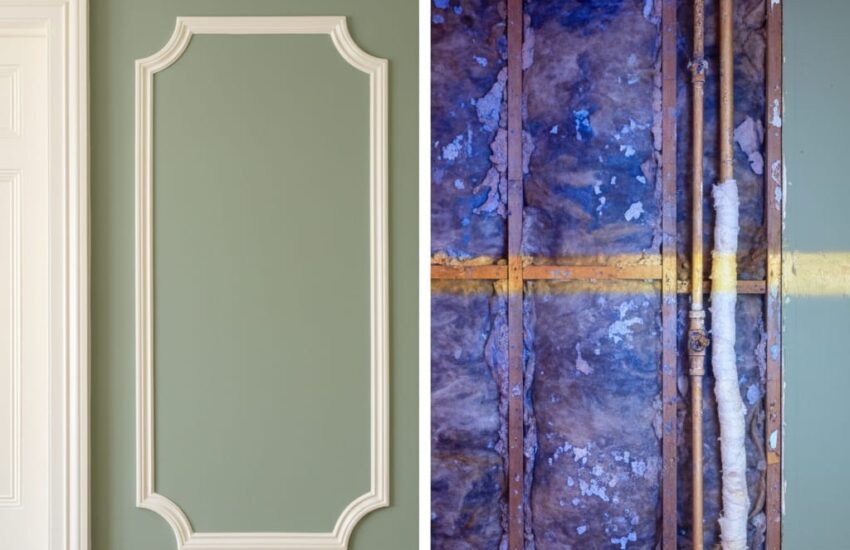
If you’re looking at older homes, here’s what I wish someone had told me from the beginning. First, assume nothing. Just because a house looks updated doesn’t mean the hazards are gone. Flippers often cover problems rather than fix them. New drywall over old walls doesn’t remove the lead paint behind it. New flooring over old tile doesn’t make the asbestos disappear.
Second, understand the difference between encapsulation and removal. Encapsulation means sealing the hazardous material so it can’t release fibers or dust. It’s often safer and cheaper than removal, which can actually increase risk if not done properly by licensed professionals. But encapsulation only works if the material stays in good condition. If you later drill into that sealed wall, you’re back to square one.
Third, know your local disclosure laws. In many states, sellers are required to disclose known environmental hazards. But “known” is the key word. If they never tested, they may honestly not know what’s hiding in their walls. That’s why your own testing matters so much.
Fourth, budget for remediation. If you’re buying an older home, assume you’ll eventually spend money on asbestos or lead abatement. Even if you don’t plan to renovate immediately, future projects, adding a skylight, replacing windows, running new electrical, could disturb hidden hazards. Build that into your financial planning from the start.
Fifth, don’t panic. Finding asbestos or lead in an old home is not a deal-breaker. It’s just information. And information is power. It lets you make conscious choices about how to proceed, rather than stumbling into danger out of ignorance.
I ended up buying that Cape Cod. I’ve lived here five years now, and I’ve learned to work around its hidden quirks. When I want to hang a picture, I think twice before drilling. When I renovate, I hire contractors who understand lead-safe work practices. When friends admire my original windows, I tell them the truth: they’re beautiful, but they’re also toxic, and I’ll replace them someday when I can afford to do it right.
That bungalow I almost bought? Someone else got it. I drive by sometimes and wonder if they knew what they were getting into. I hope they did. I hope someone told them about asbestos and lead before they fell in love with the clawfoot tub.
If you’re house hunting, especially if you’re drawn to the charm and character of older homes, take this with you. Ask the hard questions. Pay for the extra inspections. Learn what’s hiding behind the beauty before you sign your name a hundred times at the closing table. Your health, your wallet, and your peace of mind will thank you.
Buying a home is full of decisions that feel overwhelming, but you don’t have to make them alone. Our website is packed with resources to help you navigate everything from environmental hazards to financing to renovation planning. Head over and explore, because the more you know before you buy, the better you’ll sleep after you move in.
References
U.S. Environmental Protection Agency. (2025, May 29). *Questions and answers for homeowners and renters about understanding lead inspections risk*. Retrieved from https://www.epa.gov/lead/questions-and-answers-homeowners-and-renters-about-understanding-lead-inspections-risk
Realtor.com Editorial Team. (2025, November 3). *It’s not just mold: Every homebuyer should be checking for these 3 other hazards before buying*. Retrieved from https://www.realtor.com/advice/buy/home-hazards-homebuyer-inspection-lead-radon-asbestos/
U.S. Environmental Protection Agency. (2022, September 30). *Asbestos in the home*. Retrieved from https://www.cpsc.gov/safety-education/safety-guides/home/asbestos-home
Alpha Environmental. (2025, November 16). *Common environmental hazards home inspectors often miss*. Retrieved from https://alphaenvironmental.net/blog/realtors-present-for-home-inspection/
U.S. Environmental Protection Agency. (2026, January 5). *Lead abatement, inspection and risk assessment*. Retrieved from https://www.epa.gov/lead/lead-abatement-inspection-and-risk-assessment