
 Posted by
When my husband and I bought our house, the real estate agent kept calling the downstairs space an “in-law suite.” We nodded politely, but internally we rolled our eyes. We didn’t have in-laws who needed to live with us. We didn’t have elderly parents or adult children or any of the situations that supposedly required separate living quarters.
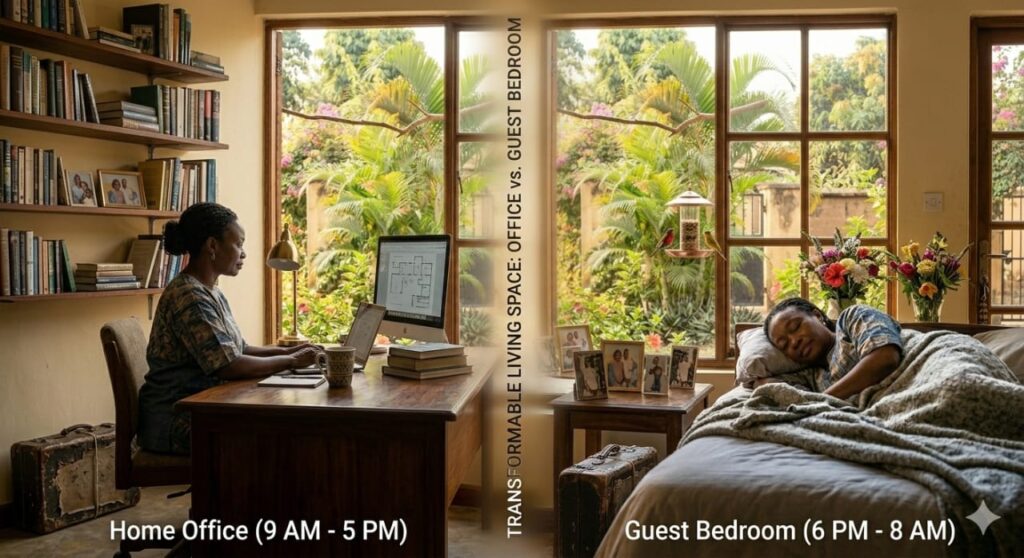
What we had was a modest budget and a house that happened to include a weird little apartment over the garage that we weren’t sure we’d ever use. Seven years later, that weird little apartment has been a home office, a guest suite, a short-term rental, a refuge for a friend leaving a bad marriage, a place for my mother to recover after surgery, and a pandemic-era schoolroom when my nephew needed quiet space for virtual learning.
It has earned us thousands of dollars in rental income, preserved countless relationships by giving guests their own space, and saved us from at least one major renovation when our needs changed unexpectedly. The benefits of buying a home with a guest room or separate living quarters aren’t always obvious on moving day. But over time, that extra space becomes one of the most valuable features you never knew you needed.
Let me start with the most immediate benefit: hosting without stress. I love having people stay with us. I love the long conversations, the shared meals, the feeling of a full house. But I also love my privacy and my routines. Before we had separate guest quarters, overnight visitors meant surrendering our space completely. Our schedule revolved around theirs. Our bathroom became communal. Our quiet evenings became social obligations. By day three, everyone was ready for everyone else to leave.
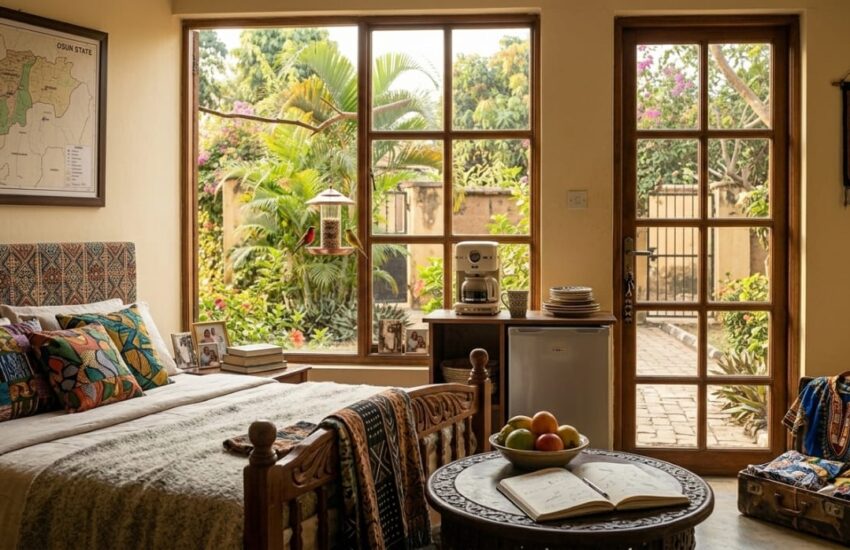
The guest room changed that. Visitors have their own space now, their own bathroom, their own entrance, their own mini-fridge and coffee maker. We share meals and conversations when we want to, and retreat to our separate spaces when we need to. Visits are longer, more frequent, and infinitely more enjoyable. Friends who used to stay in hotels now stay with us, because they get the privacy of a hotel with the connection of being in our home.
For family, the dynamic is even better. My mother, who lives across the country, visits twice a year for two weeks at a time. In our old house, two weeks together would have strained even our close relationship. Now she has her own space, her own rhythm, her own bathroom. She makes her own coffee in the morning and wanders over when she’s ready for company. We’re closer than ever, partly because we’re not constantly on top of each other.
The financial angle surprised me most. When we first bought, we didn’t plan to rent out the space. It felt too complicated, too invasive. But then a friend mentioned she was looking for a short-term rental while between apartments, and we tentatively agreed. The income was nice, but the experience was better. We discovered that having a separate living quarters gives you options, the option to generate income, to help someone in need, to offset your mortgage during tight times.
During the years we’ve owned the house, we’ve rented the space occasionally and left it empty sometimes. That flexibility, the ability to choose is itself a benefit. When money is tight, we can generate income. When we need space for family, we have it. When we just want our privacy, we keep it empty. The space doesn’t demand to be used; it just waits, ready for whatever comes next.
Then there are the life changes you don’t anticipate. My friend who left her marriage needed somewhere to land quickly. Our guest apartment was empty that month. She stayed for three months, paying what she could, rebuilding her life in a safe, private space. I can’t put a price on being able to offer that.
My mother’s surgery recovery required someone to be nearby but not in her space. She stayed in the guest quarters for six weeks, and I could check on her without either of us feeling we were living in each other’s pockets. When my husband’s company went remote during the pandemic, he worked from the guest space while I taught Zoom classes from the main house. We were both home all day without driving each other crazy.
For families with aging parents, the benefits are even more profound. A separate living quarters allows parents to maintain independence while being close enough for support. It’s cheaper than assisted living, more dignified than moving in completely, and easier on family relationships than sharing a bathroom and kitchen. I’ve watched friends navigate this transition, and those with separate spaces have a much smoother path.
Adult children returning home is another scenario. It’s happening more and more as young people struggle with student debt and housing costs. A separate entrance, a kitchenette, a private bathroom, these turn a potentially fraught situation into something more sustainable. Everyone has their own space, their own boundaries, their own dignity.
Even if you never need it for any of these purposes, the resale value matters. Homes with guest quarters or separate living spaces appeal to a wide range of buyers. Multigenerational families. Remote workers needing dedicated office space. Investors looking for rental potential. Empty nesters wanting space for visiting kids. When we eventually sell, that weird little apartment over the garage will be a selling point, not an oddity.
What I’ve learned is that the benefits of buying a home with a guest room or separate living quarters aren’t just about the space itself. They’re about flexibility, the ability to adapt to life as it actually unfolds, not as you planned it. When we bought this house, we were a childless couple in our thirties with no particular needs beyond a place to live. Now we’re a family with different rhythms, different relationships, different possibilities. The house grew with us because it had room to grow.
If you’re house hunting and considering whether that extra space is worth it, I’d offer this advice: think beyond your current life. Think about who might visit, who might need help, what might change. Think about income possibilities and work possibilities and the simple luxury of having room for someone without feeling crowded by them. That space isn’t just square footage. It’s potential. It’s options. It’s a hedge against an unpredictable future.
Our guest apartment isn’t fancy. The kitchenette is basic, the furniture is mismatched, and the decor is whatever we had leftover from other rooms. But it’s ours, and it’s there, and over and over again, it’s proven to be the best decision we made when we bought this house.
If you’re curious about other features that add long-term value to a home, our website is full of articles exploring everything from basement potential to accessibility features to neighborhood considerations. Head over and explore, because the more you know before you buy, the better your home will serve you for years to come.
References
U.S. Department of Housing and Urban Development. (n.d.). *Assessments of shared housing in the United States* [Insights of housing brief]. HUD User. https://www.huduser.gov/portal/sites/default/files/pdf/Insights-of-Housing.pdf
National Credit Union Administration. (2025, February 3). *Home ownership*. MyCreditUnion.gov. https://mycreditunion.gov/manage-your-money/home-ownership
Fichera, E., & Gathergood, J. (2016). The effect of house price declines on physical health: Evidence from the housing boom and bust. *Journal of Health Economics*, 52, 6–24. https://doi.org/10.1016/j.jhealeco.2016.12.002 As cited in https://pmc.ncbi.nlm.nih.gov/articles/PMC7725589/