
 Posted by
 When I sold my first home, I assumed the commission was whatever my agent said it was. I signed the listing agreement without reading the fine print. The sale closed, the check cleared, and I never thought about commission rules again. Then I tried to buy a home in another state, and my new agent showed me a thick disclosure document. “Sign this,” she said, “so you understand who pays me and how much.” I asked why my first agent hadn’t done that. The answer surprised me: because every state has different rules.
Understanding the legal requirements for real estate commissions starts with one basic fact: commissions are not set by law. They are negotiable. The days of a fixed six percent are over, shaken by antitrust lawsuits and changing industry standards . The Department of Justice has argued that trade association rules artificially inflated broker commissions, and courts are listening. Today, you can and should negotiate. But negotiability doesn’t mean anything goes. State laws impose strict requirements on how commissions must be disclosed, documented, and paid.
First, written agreements are mandatory. New Jersey requires a signed written agreement between a broker and any salesperson or referral agent before any real estate activity begins . The agreement must spell out the rate of compensation, when commissions are paid, and what happens after termination. If the broker fails to pay within ten business days of receiving funds, they must provide a written explanation. These protections ensure that licensees get paid fairly.
For consumers, the critical requirement is disclosure. Missouri law requires licensees to disclose their agency relationship no later than the first showing . A seller’s agent must tell a buyer they represent the seller. A buyer’s agent must tell the seller they represent the buyer. Dual agency, representing both sides, requires immediate disclosure and written consent from everyone involved

Indiana law spells out a buyer’s agent’s duties clearly . They must seek properties at a satisfactory price, present all offers promptly, disclose adverse material facts, and account for all money received. What they cannot do is reveal that you will pay more than your offer or share your confidential motivations without your written consent. That confidentiality protects your negotiating position.
The biggest recent change involves cooperative compensation. Historically, listing brokers offered a share of their commission to buyer’s brokers through the MLS. That practice is ending. New NAR rules, effective in 2026, eliminate the requirement that listing brokers disclose variable rate commissions . More importantly, a listing contract may no longer require or imply that a seller will pay compensation to a buyer’s firm unless that obligation is documented in the executed offer to purchase . In plain English: you can still ask the seller to pay your buyer’s agent’s commission, but you must negotiate it as part of your offer, not assume it’s built into the listing.
Wisconsin law adds another layer: no licensee may pay a commission to an unlicensed person . All compensation must flow through the firm. And if you want to sue for unpaid commissions, you must prove you were properly licensed when the cause of action arose. An unlicensed person cannot collect a commission, no matter how much work they did.
Disclosure requirements extend beyond agency relationships. In Queensland, Australia, agents must complete a Form 8 disclosing any relationship with a third party they refer buyers to, plus any commission or benefit received . Similar principles apply in the US: if your agent recommends a lender, inspector, or attorney and gets a referral fee, they must tell you. Failure to disclose can result in significant penalties. What does all this mean for you as a buyer or seller?
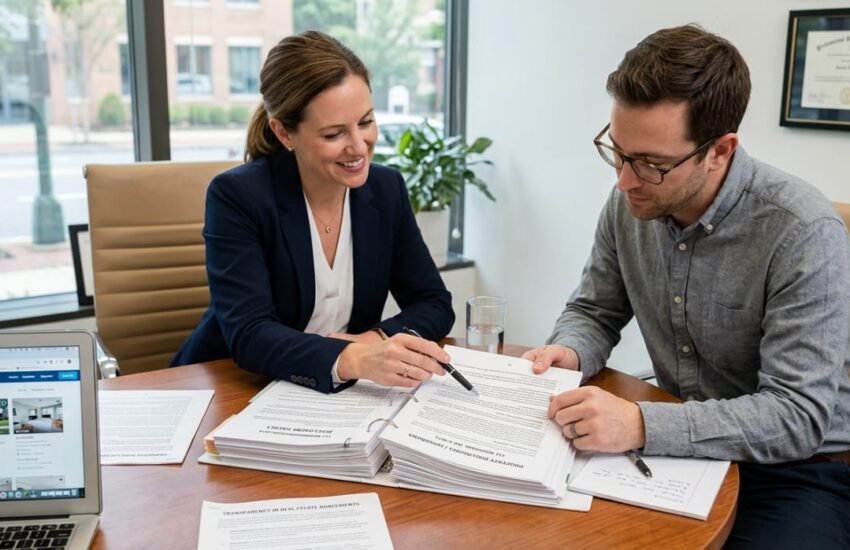
First, get everything in writing. Your listing agreement or buyer agency agreement should spell out the exact commission amount or percentage, who pays it, and when it’s earned. Vague promises or handshake deals are unenforceable.
Second, understand who represents whom. Sign the agency disclosure forms. If you’re not sure, ask. An agent who claims to represent both you and the seller must have your written consent. Without it, that’s illegal dual agency.
Third, negotiate. Commission rates are not fixed by law. You can ask for a lower rate, a flat fee, or a tiered structure based on sale price. The worst they can say is no.
Fourth, if you’re a buyer, understand how your agent gets paid before you make an offer. The old assumption that the seller automatically pays buyer agent commissions is gone. Your agreement with your agent should specify what happens if the seller offers less than your agreed commission, and whether you’re responsible for the difference.
Fifth, keep records. If you’re a licensee, New Jersey’s rules require you to maintain commission agreements and payment records for six years . If a dispute arises, those records are your only defense.
If a commission dispute lands you in court, the rules are strict. In Wisconsin, you cannot sue for a commission unless you were licensed when you earned it . In New Jersey, the Real Estate Commission won’t investigate non-payment complaints unless you have an arbitration decision or court judgment . The message is clear: follow the rules from day one, or you have no legal standing.
I learned these lessons the hard way. My first transaction had no written buyer agency agreement. When a dispute arose, I had no recourse. Now I insist on signed documents before I tour a single house. It feels formal, even uncomfortable. But that paperwork is what protects you when something goes wrong.
There’s so much more to learn about navigating real estate transactions safely. Our website is filled with articles on agency relationships, commission negotiations, and buyer protections. Head over and explore, because understanding the rules is the first step to getting a fair deal.
References
BankersHub. (2024, May 12). *New real estate commissions law: What you need to know*. https://www.bankershub.com/blogs/blog/new-real-estate-commissions-law-what-you-need-to-know
Investopedia. (n.d.). *Understanding real estate fees: Who pays the commission?*. https://www.investopedia.com/financial-edge/0611/understanding-real-estate-commissions-who-pays.aspx
Colibri Real Estate. (2024, July 1). *Legal & ethical considerations in real estate commissions*. https://www.colibrirealestate.com/career-hub/blog/legal-and-ethical-considerations-in-real-estate-commissions/
Hood Law Group. (2024, November 24). *Understanding real estate commission laws*. https://www.hood-law.com/understanding-real-estate-commission-laws/
PropertyAccess Nigeria. (2026, March 22). *Supreme Court clarifies commission rules for estate agents on property transactions*. https://propertyaccess.ng/supreme-court-clarifies-commission-rules-for-estate-agents-on-property-transactions/