

 Posted by
 When I decided to borrow against my home equity, I called my bank first. They approved me for a line of credit based on an automated valuation model. The number seemed decent. But before I signed, I called my realtor. That call saved me thousands of dollars. I thought realtors only mattered when you were buying or selling. I was wrong.
A home equity line of credit, or HELOC, lets you borrow against the difference between your home’s market value and what you owe on your mortgage. The more equity you have, the more you can borrow. But the bank’s valuation isn’t always accurate. Automated models miss recent renovations, unique features, and local market shifts.
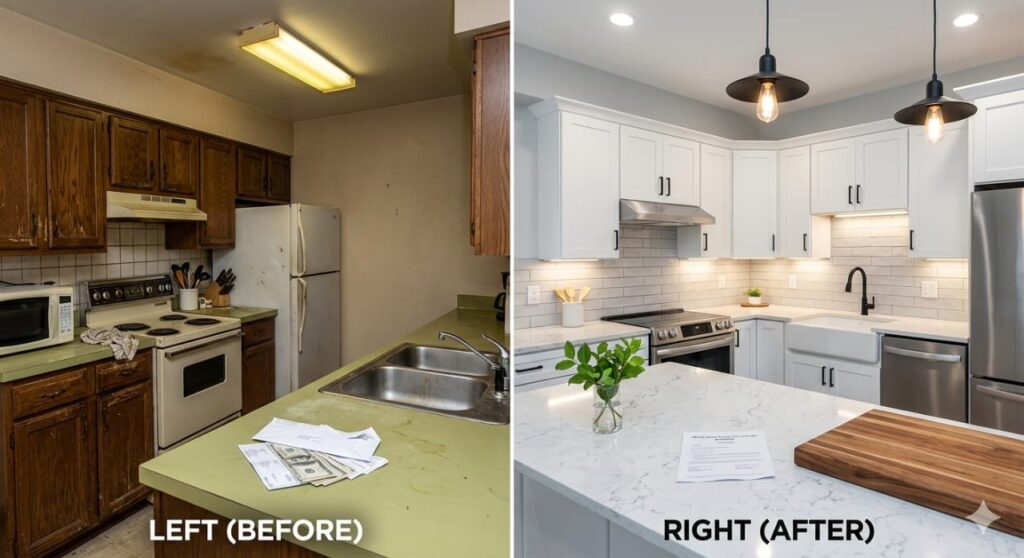
My realtor pulled comparables from the last three months. She found five homes similar to mine that had sold for significantly more than the bank’s estimated value. My kitchen update, finished deck, and new windows were all factored into her analysis. The bank’s algorithm had missed them entirely.
She also provided a broker price opinion, a professional estimate of my home’s current market value. Banks don’t require BPAs for HELOCs, but having one gave me negotiating power. I submitted her report to the bank. They revised my available credit upward by nearly forty thousand dollars.
My realtor also knew which lenders were most HELOC-friendly. Some banks are conservative, offering lower loan-to-value ratios. Others are more aggressive, lending up to ninety percent of the home’s value. She referred me to a local credit union known for competitive HELOC terms. Their rate was lower than my bank’s, and their closing costs were half.
Before I applied, she also reviewed my home’s title history. She spotted an old easement that had been recorded incorrectly. The bank might have flagged it as a title issue, delaying my approval. She helped me get it corrected before I submitted my application, saving weeks of back-and-forth.
Another thing I didn’t know: your debt-to-income ratio matters for a HELOC, but your equity matters more. My realtor explained that even with average credit, a homeowner with substantial equity is likely to be approved. The bank’s risk is lower because your home secures the loan. That confidence helped me apply without fear.
Once the HELOC was approved, my realtor helped me plan the renovations. She knew which improvements would add the most value. A bathroom remodel? Yes. A swimming pool? Probably not. She steered me toward projects that would increase my home’s resale value, not just my personal enjoyment.
She also connected me with contractors she had vetted over years of transactions. People who showed up on time, finished on budget, and didn’t leave liens on my property. Her referral network saved me from hiring a company that had a history of shoddy work.
The HELOC itself is a flexible tool. You borrow only what you need, pay interest only on what you borrow, and can reuse the credit line as you repay. My realtor explained that using HELOC funds for renovations can be tax-deductible if the improvements add value to the home. I confirmed this with my accountant, and she was right.
Not every HELOC is a good idea. My realtor also warned me about risks. If home values drop, the bank can freeze or reduce your credit line. If you can’t repay, you could lose your home. She made sure I understood these risks before I borrowed a single dollar.
Today, my kitchen is beautiful, my bathroom works, and my home is worth more than ever. My HELOC is almost repaid. And I owe part of that success to my realtor, who helped me understand my equity before I ever talked to a lender.
If you’re considering a HELOC, call your realtor first. Ask for a current market analysis. Ask for a broker price opinion. Ask about lenders and contractors and value-adding projects. Your realtor won’t approve the loan, but they’ll help you borrow smart.
There’s so much more to learn about leveraging your home’s equity. Our website is filled with articles on HELOCs, renovations, and working with trusted professionals. Head over and explore, because knowing your home’s true value is the first step to using it wisely.
References
Consumer Financial Protection Bureau. (n.d.). *What is a home equity line of credit (HELOC)?* https://www.consumerfinance.gov/
Federal Trade Commission. (2025, December 8). *Home equity loans and home equity lines of credit*. https://consumer.ftc.gov/articles/home-equity-loans-and-home-equity-lines-credit
Bank of America. (n.d.). *What is a home equity line of credit (HELOC)?* https://www.bankofamerica.com/mortgage/learn/what-is-a-home-equity-line-of-credit/
NABAE. (2023, July 25). *Getting a home equity loan: A complete guide*. https://naeba.org/getting-a-home-equity-loan-a-complete-guide/
Investopedia. (2024, November 10). *Access home equity with loans, HELOCs, or refinance options*. https://www.investopedia.com/mortgage/heloc/home-equity/