
 Posted by
 I remember the feeling vividly. My home had been on the market for just over two weeks when my agent called with an offer. I was elated, until I heard the number. It was nearly twenty percent below my asking price. My first instinct was to reject it outright and tell the buyer they were wasting my time. I felt insulted. I had worked so hard to prepare my home, and this felt like a slap in the face.
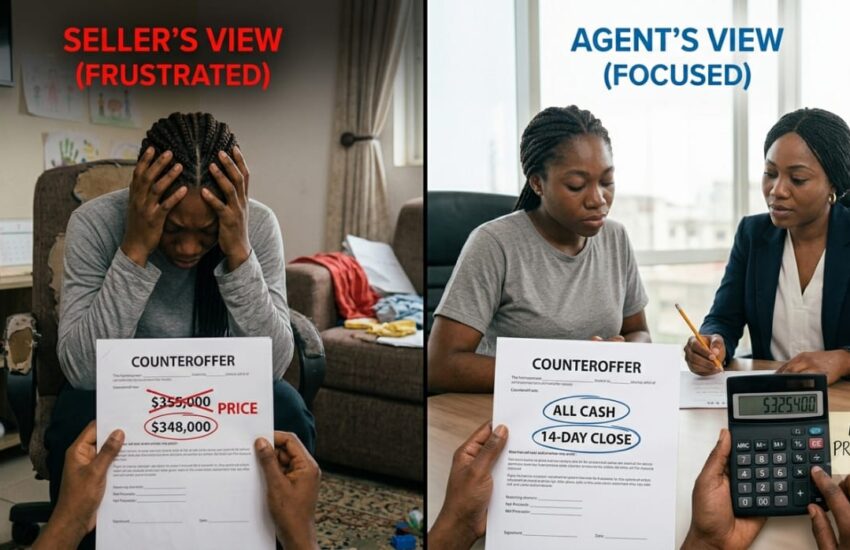
Thankfully, my agent talked me off the ledge. She reminded me that a lowball offer is not a personal attack. It is often a negotiation tactic, a starting point. The buyer may be testing the waters to see how motivated I was, or they might be using a strategy that assumes the seller will counteroffer. If I reacted emotionally and slammed the door, I could lose the opportunity to negotiate a fair deal.
I learned that the most important first step is to take a deep breath and separate my emotions from the business transaction. You are not married to the asking price, and the buyer is not calling your home ugly. They are trying to buy a house for the best possible price. By removing the emotional sting, I could see the offer objectively and plan my next move.
The second thing I did was evaluate the entire offer, not just the price. My agent pointed out that a lower number on the contract could be offset by stronger terms. Was the buyer pre-approved for a mortgage? Were they offering cash? What was the proposed closing timeline? Were there minimal contingencies? Sometimes, an offer that is ten thousand dollars less but guarantees a quick, hassle-free closing is actually more valuable than a higher offer with lots of strings attached. I realized that the terms of the deal can often make up the difference in price.
I also learned to use the offer as a data point. I asked my agent to pull new comparable sales (comps) to ensure my asking price still aligned with the market. In some cases, a lowball offer is a harsh reality check that the home is overpriced. If homes in my neighborhood were selling for less than my list price, the buyer’s offer was not unreasonable; it was just the market talking. If the comps supported my price, I had a strong case to justify my position when I countered.

The most effective strategy I used was to counteroffer strategically rather than reject the offer outright. My agent advised me to respond with a price that was closer to my asking price but still showed I was willing to negotiate. We offered the buyers a small concession to keep them engaged. A counteroffer sends a clear signal: I am open to doing business, but I know what my home is worth. It keeps the ball in play.
However, I also learned that there is a time to walk away. If the buyer refuses to budge after a reasonable counteroffer, it is okay to move on. Sometimes the gap is just too wide. But I also learned to avoid being offended by silence. If an offer expires, it can often be revived with a simple phone call from the agent, creating a new counteroffer that works on my terms.
Handling lowball offers is a test of your patience and strategy. The goal is not to win a fight against the buyer, but to close a deal that makes sense for you. By staying calm, evaluating the offer’s full terms, using market data to justify your position, and making strategic counteroffers, you can turn a lowball offer into a successful sale.
There is so much more to learn about navigating real estate negotiations. Our website is filled with articles on pricing strategies, market trends, and working with agents. Head over and explore, because the right preparation makes all the difference.
References
Harnish Company. (2025, March 17). *How to handle lowball offers without losing your cool*. https://www.harnishcompany.com/blog/how-to-handle-lowball-offers-without-losing-your-cool
Realtor.com. (2025, May 1). *Buy a house for less: 5 tips to win with a lowball offer*. https://www.realtor.com/advice/buy/five-tips-successful-lowball-offer/
Ohio MLS Flat Fee. (2026, July 12). *How to handle low-ball offers on your home*. https://ohiomlsflatfee.com/how-to-handle-low-ball-offers-on-your-home/
Kris Lindahl. (2026, March 24). *How home sellers should respond to lowball offers*. https://www.krislindahl.com/blog/best-ways-for-home-sellers-to-respond-to-lowball-offers-on-their-property/
Real Estate YouTube. (2025, April 14). *How I deal with low-ball offers in real estate*.