
 Posted by
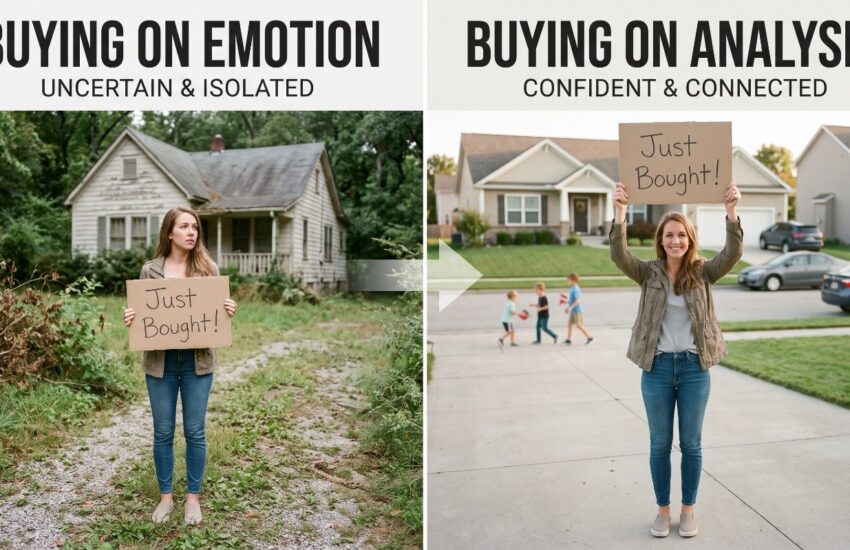
I bought my first home for the wrong reason. I bought it because I loved it. The wrap-around porch. The clawfoot tub. The mature oak tree in the front yard. I did not think about resale value. I did not think about appreciation. I assumed that buying a home was inherently a good investment, that values would rise over time, that I would make money simply by owning it. That assumption cost me. When I sold five years later, the home had appreciated barely enough to cover the selling costs. I walked away with nothing. I had bought with my heart. I should have bought with my head and my heart.
Future home value appreciation is not guaranteed. It is not automatic. It depends on a complex interplay of factors that you can assess before you buy. Understanding those factors can mean the difference between a home that builds wealth and a home that traps you in a stagnant investment.
The first factor is location. This is the most important variable in real estate. Location determines everything. A home in a desirable neighborhood will appreciate faster than an identical home in a less desirable area. What makes a location desirable? Good schools. Low crime. Proximity to employment centers. Access to public transportation. Walkability. Parks and green spaces. Shopping and dining. The quality of local government. The stability of the community. These factors are not static. They change over time. A neighborhood that is improving will see values rise. A neighborhood that is declining will see values fall. I learned to research not just where a neighborhood is today, but where it is heading.
The second factor is supply and demand. The law of supply and demand applies to housing just as it does to any other market. When demand is high and supply is low, prices rise. When demand is low and supply is high, prices fall. What affects demand? Population growth. Job growth. Interest rates. Consumer confidence. What affects supply? New construction. Zoning regulations. Land availability. The balance between the two determines the direction of prices. I learned to look at building permits, zoning board agendas, and local economic development plans. Those documents told me what was coming next.
The third factor is property characteristics. Some features are associated with higher appreciation rates. A well-maintained home. An updated kitchen and bathroom. Energy-efficient windows and appliances. Curb appeal. A functional floor plan. A garage. A backyard. These are not guarantees, but they are advantages. I learned that the features that are most appealing to the widest range of buyers are the ones that hold their value best. Unusual features, no matter how charming, can limit resale potential.
The fourth factor is the condition of the surrounding homes. A beautifully renovated home in a neighborhood of neglected properties will not appreciate well. The surrounding properties set the tone. If the neighborhood is well-maintained, values will be stable or rising. If the neighborhood is declining, values will fall regardless of how beautiful your individual home is. I learned to drive through neighborhoods at different times of day. I looked for signs of pride of ownership. Well-kept lawns. Fresh paint. Updated roofs. Those are signs of a neighborhood that is invested in itself.
The fifth factor is local market trends. The housing market is cyclical. There are periods of rapid appreciation and periods of stagnation or decline. I learned to look at historical data for the neighborhood. How have values changed over the past ten, twenty, thirty years? What were the best years? The worst years? What caused the changes? A neighborhood that has shown steady, sustainable growth over decades is more likely to continue that trajectory than a neighborhood that experienced a sudden spike. Spikes are often followed by corrections.
The sixth factor is economic fundamentals. What is happening in the local economy? Is employment growing or shrinking? Are wages rising or stagnating? Is the population growing or declining? Are new employers moving in or existing employers leaving? These are the underlying forces that drive housing demand. I learned to read the local business journal, to follow economic development announcements, to talk to long-time residents. They knew things that the data did not.
The seventh factor is the intangibles. Some neighborhoods have a sense of place that is hard to quantify. The architecture. The tree-lined streets. The community events. The local culture. These qualities attract buyers who are drawn to something more than square footage. They create demand that is resilient to economic downturns. I learned to walk the neighborhoods I was considering. I talked to the people who lived there. I asked them what they loved about it. Their answers told me more than any spreadsheet could.
I bought my second home with more intention. I assessed the location. The market trends. The neighborhood condition. The intangibles. I paid attention to what was happening around the home, not just inside it. I did not just love the house. I loved the trajectory. That home has appreciated significantly in the years since I bought it. But the appreciation is not why I love it. It is a bonus. The real value is the home itself. The location itself. The life I built there. Appreciation is a gift that grows from the right choices.
References
1.Federal Reserve Bank of Chicago. (2018). *Determinants of housing values and variations in home prices*. [https://www.chicagofed.org/publications/profitwise-news-and-views/2018/determinants-of-housing-values-and-variations-in-home-prices](https://www.chicagofed.org/publications/profitwise-news-and-views/2018/determinants-of-housing-values-and-variations-in-home-prices)
2. Freddie Mac. (n.d.). *Frequently asked questions: House Price Index*. [https://www.freddiemac.com/research/indices/house-price-index](https://www.freddiemac.com/research/indices/house-price-index)
3. Federal Reserve Board. (2026). *Speech by Governor Barr on housing*. [https://www.federalreserve.gov/newsevents/speech/barr20260923a.htm](https://www.federalreserve.gov/newsevents/speech/barr20260923a.htm)