
 Posted by
 When I passed my real estate exam, I thought the hard part was over. I had my license. Now I could start selling houses. I was wrong. The next decision, choosing which brokerage to work for, turned out to be one of the most important career choices I would ever make. And I almost got it wrong.
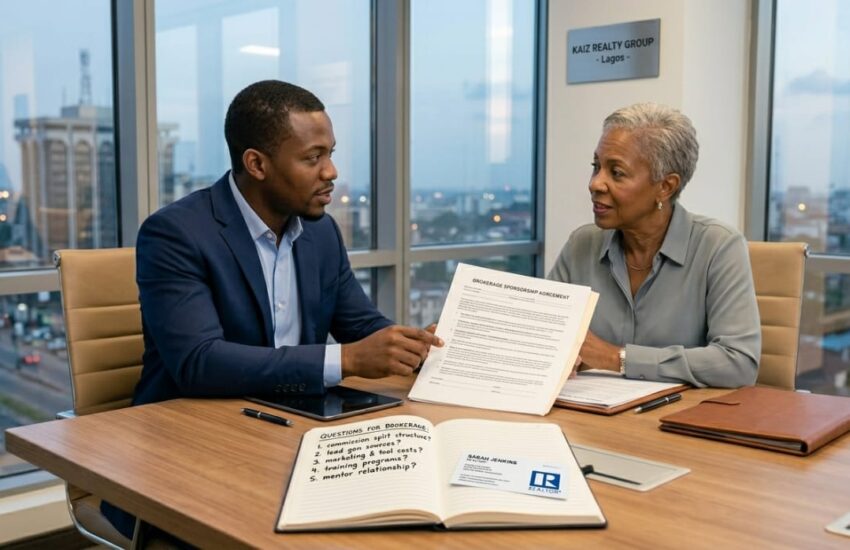
I learned quickly that not all brokerages are the same. The commission split, the training, the culture, the support, each varies wildly. And unlike a traditional job where the employer interviews you, in real estate, you should be interviewing the broker. You are building a business. You need a partner, not just a desk.
The first mistake I made was focusing only on commission splits. A broker offered me a ninety percent split, and I almost signed on the spot. But a mentor pulled me aside and said something I have never forgotten: “A hundred percent of nothing is nothing.” A high split means nothing if the brokerage does not help you generate business. Some brokerages lure new agents with high splits but offer zero training, zero leads, and zero support. You are left alone, sinking.
The opposite model is a traditional split brokerage, where the broker takes a percentage of each transaction in exchange for office space, marketing, and support. Some brokerages also offer a fee-based model, where you pay a flat fee per transaction regardless of the commission amount. This gives you more control but often fewer resources. I learned to look at the whole picture, not just the split.
Training was the next thing I evaluated. Real estate school taught me to pass the exam. It did not teach me how to fill out a contract, negotiate an offer, or build a client base. Some brokerages have robust training programs. Others have nothing. I asked to sit in on a training session before committing. The broker who refused was off my list. The one who welcomed me showed me their commitment to new agents.

I also asked about mentorship. A classroom is helpful, but I needed someone to walk me through my first few deals. One broker assigned me a mentor who reviewed my contracts, joined my first listing appointments, and answered my panicked texts at 9 PM. Another broker said, “You will figure it out.” I chose the mentor.
Support staff matters more than I expected. Paperwork is a nightmare for many new agents. Some brokerages have full-time transaction coordinators who handle the paperwork for you. Others expect you to do it all. I asked about administrative support, marketing resources, and technology tools. A brokerage that provides a CRM, professional photography, and a user-friendly website saves you thousands of dollars and hours of headaches.
Culture is harder to quantify, but I felt it immediately. One office was silent, agents hiding in their cubicles, no collaboration. Another office was buzzing, agents sharing leads, laughing, helping each other. I asked about meetings, events, and how agents treat each other. I also asked about turnover. If agents leave quickly, that is a red flag.
Local market knowledge was another factor. Some brokerages have a strong presence in specific neighborhoods. Others are generic. I wanted to work in a specific area, so I looked for a brokerage that dominated that market. Their agents knew the schools, the traffic patterns, and the hidden inventory. That knowledge made them better agents.
Broker accessibility was critical. Some brokers are too busy selling their own deals to help you. Others are dedicated managers whose job is to support you. I asked how many agents each manager supervised. More than fifty full-time agents per manager is a recipe for neglect.
Internet presence and branding also mattered. When I told people which brokerage I worked for, they looked it up. If the website was outdated or the social media was dead, it reflected poorly on me. I wanted a brokerage with a professional online presence and positive reviews.
Specialization was another consideration. Some brokerages focus on luxury homes. Others focus on first-time buyers, investors, or commercial property. I chose a brokerage that aligned with the clients I wanted to serve. Their brand attracted my ideal customer.
Fees added up quickly. Desk fees, E&O insurance, transaction fees, technology fees. One brokerage charged a flat monthly desk fee regardless of sales. Another charged a per-transaction fee. I added everything up before signing. The cheapest split was not the cheapest overall.
Finally, I trusted my gut. One broker promised the world but felt slick and dishonest. Another broker was honest about the challenges of the first year. That honesty built trust. I chose the broker I felt I could call with a problem, not just a success.
Finding the right brokerage took me six weeks. I interviewed seven different offices. I asked hard questions. I called current agents to ask about their real experience. And when I finally signed, I knew I had made the right choice.
There is so much more to learn about building a successful real estate career. Our website is filled with articles on choosing brokerages, negotiating splits, and growing your business. Head over and explore, because the right start leads to the right finish.
References
KAP Real Estate. (n.d.). *How to choose a real estate broker: Important things to consider*. https://www.kapre.com/resources/real-estate/choosing-real-estate-brokerage
South Oak Title. (n.d.). *Selecting a real estate office to work for: 4 considerations*. https://southoaktitle.com/blog/selecting-a-real-estate-office-to-work-for-4-considerations
Champions School of Real Estate. (2024, March 5). *Deciding on the right real estate brokerage*. https://www.championsschool.com/resources/career-hub/choosing-a-brokerage/
US Realty Training. (2024, October 10). *How to choose a real estate brokerage (guide)*. https://www.usrealtytraining.com/blogs/how-to-choose-a-real-estate-brokerage
PrepAgent. (n.d.). *15 things to consider when looking for a broker to work for*. https://www.prepagent.com/article/broker-search