

 Posted by
 See how virtual staging helps sell homes faster and for more money. Learn how this digital tool creates emotional appeal, saves money, and showcases potential to online buyers. In today’s real estate market, the first showing doesn’t happen at an open house, it happens on a screen. A buyer scrolls through dozens of listings in minutes, and a vacant, cluttered, or poorly decorated home often gets a swift swipe into oblivion. This is the critical moment where virtual staging has become a game-changer. It is not merely a digital trick; it is a sophisticated marketing tool that uses technology to solve a classic sales problem: helping buyers emotionally connect with an empty space by letting them visually experience its ultimate potential.
Virtual staging is the process of using specialized software to digitally furnish and decorate photographs of an empty or sparsely filled room. Unlike traditional staging, which involves renting, moving, and arranging physical furniture, virtual staging is done entirely on a computer. Professional designers and photo editors use a library of digital furniture, artwork, and decor to create realistic, appealing images that define the purpose of each room and illustrate a cohesive, desirable lifestyle. The result is a listing that feels warm, inviting, and “move-in ready,” even if the actual property is completely bare.
The advantages of this approach are significant, starting with profound cost and logistical benefits. Traditional staging can cost thousands of dollars and requires coordination with moving crews and rental companies. Virtual staging typically costs a fraction of that, often between $50 to $150 per room, and can be completed in a day or two. There’s no need to clear out existing furniture or worry about damage to floors and walls. This makes it an exceptionally accessible tool for sellers on a budget, vacant property investors, or anyone who needs to list their home quickly without the hassle of physical staging. It provides the visual impact without the heavy lifting.
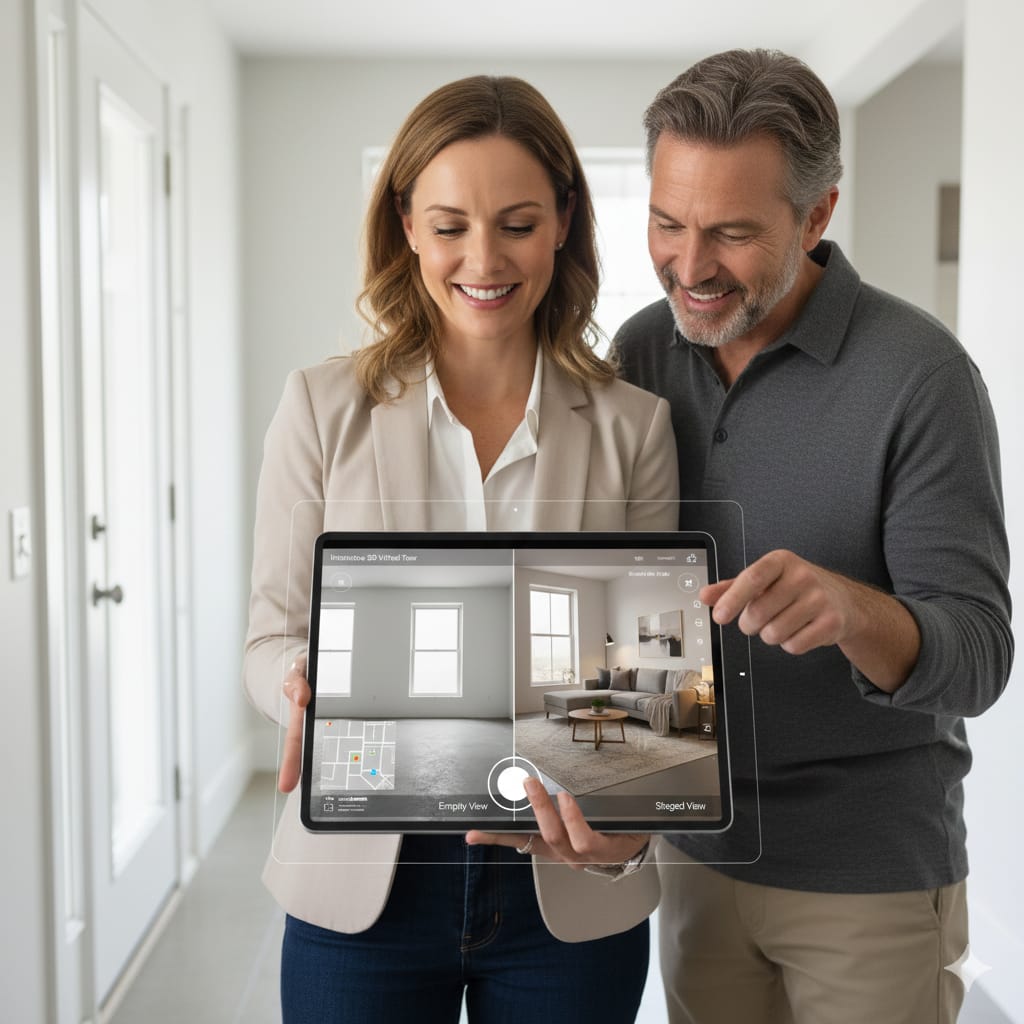
The core power of virtual staging lies in its ability to solve visual problems and maximize perceived value. It can effortlessly correct challenges that deter buyers. A small bedroom can be made to feel larger with appropriately scaled digital furniture. An awkward, empty alcove can be transformed into a charming home office or reading nook. A dated but functional kitchen can be visually “refreshed” with new digital cabinet colors or modern fixtures. Most importantly, it defines the ambiguous. Buyers often struggle to visualize how to use an empty formal dining room or a large, open basement. Virtual staging provides that clarity, showing them a home theater, a playroom, or a guest suite, effectively selling them on the square footage they might otherwise overlook.
However, the most critical rule of virtual staging is transparency and accuracy. The goal is to enhance and clarify, not to deceive. Reputable agents always disclose that images are virtually staged, often by including a side-by-side slider on the listing that shows the “before” (empty) and “after” (staged) images. The digital furnishings must be realistically proportioned, and the edits should not alter the fundamental architecture of the home, such as removing a structural column or adding a non-existent window. The integrity of the representation is paramount; the staged images are a vision of possibility, not a false promise.
In the end, virtual staging is about controlling the narrative of your home’s story. In the crucial online first impression, it allows you to present a property at its absolute best, helping it compete effectively in a crowded digital marketplace. By creating an emotionally engaging, aspirational visual experience, it attracts more serious buyers, generates more showings, and can ultimately lead to a faster sale at a better price. It proves that in real estate, sometimes the most powerful way to show what *is* is to beautifully illustrate what *could be*.
References
National Association of Realtors. (2023). *Profile of home staging*. In 2023 National Association of Realtors report. (Cited in virtual staging benefits analyses showing 81% of buyers visualize properties better with staging). Retrieved from sources referencing NAR data
Real Estate Staging Association. (2020). *Home staging impact study*. (Reports 85% of staged homes sold 5-23% above asking price; virtual staging achieves similar ROI at lower cost). Referenced in https://www.styldod.com/blog/benefits-of-virtual-staging
Sotheby’s International Realty. (n.d.). *Virtual staging market impact study*. (Found virtually staged homes sell for 6-10% more, equating to $7,000-$10,000 premium on mid-range properties). Cited in https://homejab.com/virtual-staging-vs-traditional-staging-cost-and-roi-guide/
HomeLight. (n.d.). *Staging effectiveness survey*. (67% of agents report higher sale prices; staged homes sell 5-11 days faster; virtual reduces non-serious inquiries by 45%). Referenced in https://aihomedesign.com/blog/services/virtual-staging-statistics/
RE/MAX. (n.d.). *Virtual staging performance data*. (74% increase in serious buyer interest; staged listings average 23 days on market vs. 184 for unstaged). Cited in https://homejab.com/virtual-staging-vs-traditional-staging-cost-and-roi-guide/