 Posted by
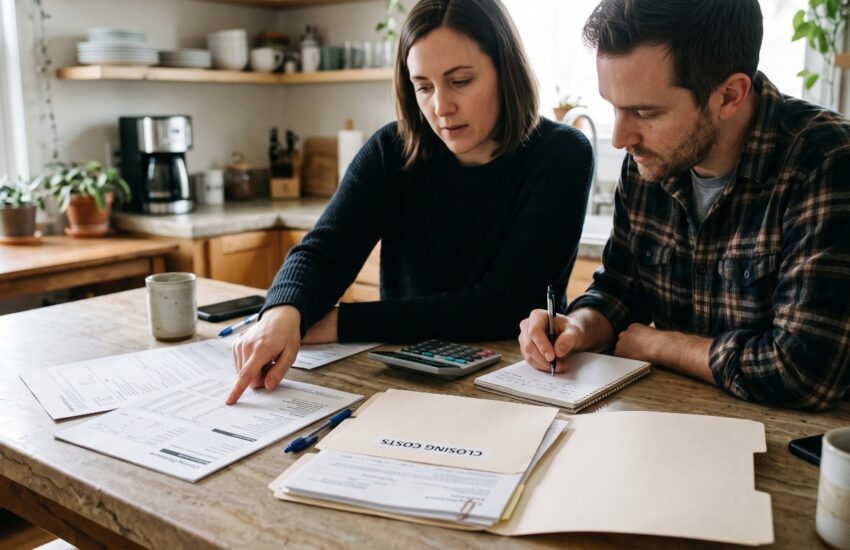
 The number hit me like a slap. I had saved diligently for my down payment. I had budgeted for moving expenses. I had even set aside a little extra for furniture. Then my lender sent me the final closing disclosure, and I saw a line item I had not fully understood. Closing costs. The total was nearly five percent of the purchase price. I had known they existed. I had not known they would be that much. I sat at my kitchen table, staring at the number, wondering how I had missed something so important.
Closing costs are the fees and expenses required to finalize a real estate transaction. They are separate from the down payment. They cover the services and fees required to transfer ownership from the seller to the buyer. They are not optional. They are part of the cost of buying a home. And they are often the biggest surprise for first-time buyers.
The largest single component of closing costs is usually the loan origination fee. This is what the lender charges to process and underwrite the mortgage. It is typically one percent of the loan amount, though it can vary. Some lenders charge a flat fee. Others charge a percentage. Some advertise no origination fees but make up for it with higher interest rates. It is important to compare the full picture, not just one line item.
The second major component is third-party fees. These are costs paid to companies other than the lender. An appraisal fee pays for a licensed appraiser to determine the market value of the home. A credit report fee pays for the lender to pull your credit history. A title search fee pays for a company to verify that the seller has the legal right to sell the property. Title insurance protects the lender and the buyer from claims against the property. A survey fee pays for a professional to confirm the property boundaries. An inspection fee pays for a home inspector to evaluate the condition of the property. Each of these services protects you or your lender in some way. Each one costs money.
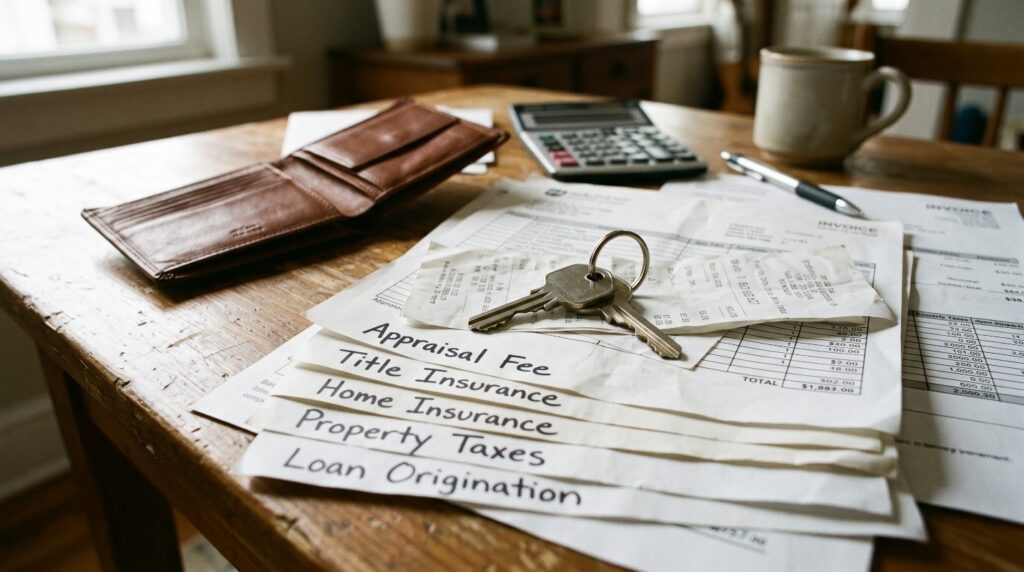
The third component is prepaid items. These are expenses you pay in advance at closing. Property taxes are often prorated, meaning you reimburse the seller for taxes they have already paid for the portion of the year you will own the home. Homeowner’s insurance is typically paid for the first year at closing. Mortgage insurance, if required, may also be collected upfront. Prepaid interest covers the interest on your loan from the closing date to the end of the month. These costs vary depending on when in the month you close.
The fourth component is government recording fees. These are charged by your local government to officially record the transfer of the property. They are usually a few hundred dollars, but they vary by location. Some states also charge transfer taxes, which are calculated as a percentage of the purchase price. In some cases, the seller pays these. In others, the buyer does. It depends on local custom and the terms of your contract.
The fifth component is the escrow account. Your lender may require you to prepay several months of property taxes and homeowner’s insurance into an escrow account at closing. This ensures that there is enough money in the account to pay those bills when they come due. It is not a fee. It is your money, held in trust. But it is still cash you need to bring to the table.
The total closing costs typically range from two to five percent of the purchase price. On a three hundred thousand dollar home, that is six thousand to fifteen thousand dollars. That is not pocket change. It is a significant amount of money that must be accounted for before you close.
There are ways to manage closing costs. Some lenders allow you to roll them into your loan, which increases your monthly payment but reduces the cash needed upfront. Some sellers agree to pay a portion of the closing costs as part of the negotiation. Some states and local governments offer first-time homebuyer programs that provide grants or low-interest loans to cover closing costs. It is worth researching what is available in your area.
The most important thing you can do is prepare early. Ask your lender for a loan estimate within three days of applying. This document lists all the closing costs you can expect to pay. Review it carefully. Ask questions about anything you do not understand. Compare estimates from multiple lenders. And budget for closing costs from the beginning, not at the end. The more you know, the less likely you are to be surprised.
I wish I had known all of this before I started house hunting. I would have saved differently. I would have negotiated harder. I would have slept better the night before closing. But I learned. And now I share what I learned so that other buyers do not have to learn the hard way.
References
1.Freddie Mac. (n.d.). *Understanding homebuying costs*. [https://myhome.freddiemac.com/buying/understanding-costs](https://myhome.freddiemac.com/buying/understanding-costs)
2. Consumer Financial Protection Bureau. (n.d.). *Closing costs*. [https://www.consumerfinance.gov/owning-a-home/closing-costs/](https://www.consumerfinance.gov/owning-a-home/closing-costs/
3. Redfin. (2026). *What are closing costs and how much will you pay?* [https://www.redfin.com/blog/what-are-closing-costs/](https://www.redfin.com/blog/what-are-closing-costs/)