
 Posted by
 The house was perfect. At least, that’s what we thought when my parents bought it twenty years ago. A charming colonial with a big backyard, plenty of space for gatherings, and a neighborhood my mother loved. They planned to age in place there, to grow old together in the home they’d built. Nobody thought about the three steps leading to the front door.
Nobody considered the narrow bathroom doorways or the staircase to the only full bathroom. Nobody imagined a future where those details would become barriers. Then my father’s mobility declined. A stroke, then another, then Parkinson’s on top of everything else. Suddenly, the house that had held so many memories became a series of obstacles.
The steps he’d walked up thousands of times became an impossible climb. The bathroom he’d used daily became inaccessible. The bedroom upstairs became a distant territory he could no longer reach. My mother became his caregiver, but she also became his lifeline in a house that had turned against them.
That experience taught our entire family something we wish we’d understood decades earlier: the importance of home accessibility for people with disabilities or special needs isn’t just about wheelchairs and ramps. It’s about dignity, independence, and the ability to keep living in the place you love.
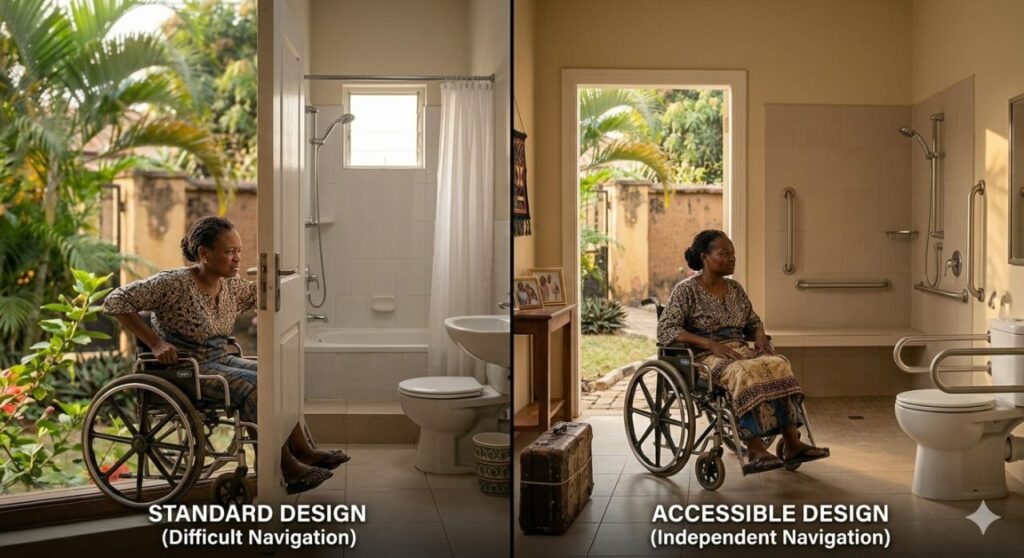
Let me start with what accessibility actually means, because it’s broader than most people realize. Accessibility means that a person can enter their home without assistance. It means they can use the bathroom independently. It means they can prepare food, bathe, sleep, and move through their daily life without relying on someone else for every single task. It means the home supports them, rather than creating barriers they must constantly fight.
For my father, the lack of accessibility meant a steady loss of independence. First he needed help with the steps. Then he needed help with the bathroom. Then he needed help with everything, because the house had taken so much from him. By the time we moved him to a nursing home, he’d lost abilities that might have been preserved if his environment had supported him instead of defeating him.
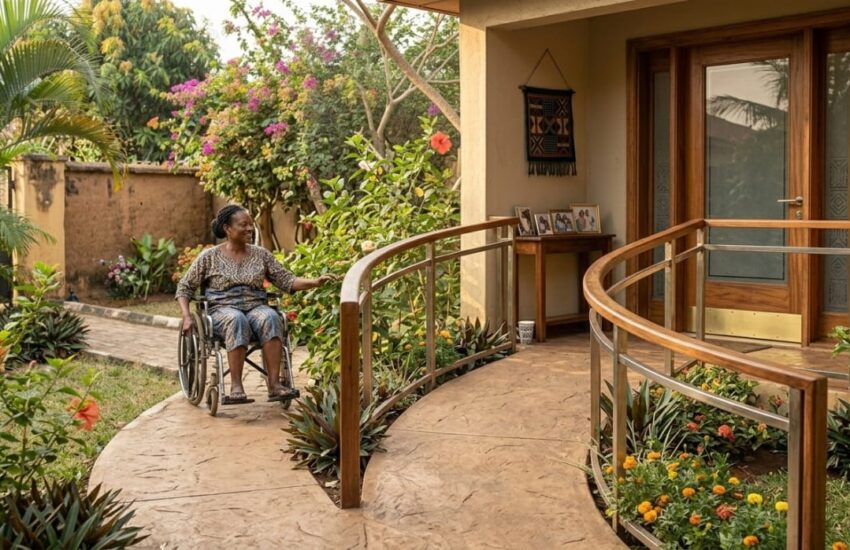
The most critical areas to evaluate in any home are the entrance, the bathroom, and the bedroom, especially if they’re on different floors. A home that requires stairs to reach the main living areas, or stairs to reach the only bathroom, is a home that will eventually become impossible for someone with mobility limitations. Even if you don’t need accessibility now, understanding the importance of home accessibility means thinking ahead. Ramps can be added, but a steep, narrow staircase to the only bathroom is a problem with no good solution.
Door width matters enormously. Standard interior doors are often too narrow for wheelchairs or walkers to pass through. Bathroom doors are typically the worst offenders, narrow, opening inward, with a toilet and sink arranged in ways that make transfer impossible. When we finally modified my parents’ home, widening those doors required tearing out walls and reconfiguring the entire bathroom layout. It was expensive, disruptive, and ultimately only partially successful because the room was too small to begin with.
Bathrooms deserve special attention because they’re the most dangerous rooms in any house. A bathroom that works for someone with mobility challenges needs a roll-in shower or at least a curbless entry, grab bars properly anchored in walls, a toilet at the right height, enough floor space for a wheelchair to turn around, and a sink that allows knee space underneath. Very few older homes have any of these features. Retrofitting them is possible but costly.
The kitchen is another accessibility battleground. Lower countertops, pull-out shelves, side-opening ovens, lever handles instead of knobs, and sufficient knee space under sinks and cooktops, these features determine whether someone can continue to cook for themselves. My mother, who loved to cook, spent her last years unable to use her own kitchen because she couldn’t reach the cabinets or stand long enough at the counter.
Flooring matters too. Thick carpet makes wheelchairs and walkers difficult to maneuver. Area rugs are tripping hazards. Uneven floors, thresholds between rooms, and changes in flooring material can all create barriers. The ideal accessible home has smooth, continuous, slip-resistant flooring throughout.
Lighting and electrical are often overlooked. Good lighting reduces fall risk. Switches and outlets at accessible heights, not too low, not too high, allow independent use. Smart home technology can add control for people with limited mobility, allowing them to operate lights, thermostats, and locks from a tablet or voice command.
But accessibility isn’t just about physical mobility. For people with sensory disabilities, different features matter. Visual smoke alarms for those with hearing loss. High-contrast edges on steps for those with low vision. Clear sight lines and good acoustics for those with hearing aids. Predictable layouts for those with cognitive disabilities who may become confused in complex spaces.
The hardest lesson our family learned is that accessibility is not something you can easily add later. Yes, modifications are possible. We added a ramp, widened doors, installed grab bars. But we couldn’t change the fact that the only bathroom was on the second floor. We couldn’t create a first-floor bedroom where none existed. We couldn’t make the lot large enough for a proper addition.
The house’s fundamental design was wrong for our needs, and no amount of renovation could fully fix it. If you’re house hunting to age in place or accommodate a family member with disabilities, here’s what I’d recommend. First, prioritize single-level living. If you must have stairs, make sure there’s a bedroom and a full bathroom on the main floor. Second, measure door widths and hallway clearances. Standard wheelchair width is about 32 inches, but the turning radius requires much more space.
Third, look at bathrooms with a critical eye. Could a wheelchair fit? Could someone transfer safely? Is there room for a caregiver to assist? Fourth, consider the entrance. Zero-step entries are ideal. If there are steps, is there room to add a ramp without creating a switchback monstrosity? Fifth, think about the kitchen. Could someone using a wheelchair or walker navigate it safely? Sixth, look at the lot itself. Sloped yards, uneven paths, and distant parking can all create barriers.
Finally, consider the neighborhood. Accessible housing is worthless if the surrounding environment is inaccessible. Are there curb cuts at intersections? Accessible public transportation? Nearby services within walking distance for those who can’t drive? A home that’s perfectly accessible inside but isolated outside is still a prison.
My father never got to age in place. The house he loved couldn’t accommodate the person he became. That loss, of home, of independence, of the familiar, was as painful as any physical decline. If I could go back and whisper something to my younger self, it would be this: when you choose a home, choose one that can hold you through every stage of life. Choose doorways wide enough for whatever comes. Choose bathrooms that won’t become battlefields. Choose a layout that won’t exile you from your own bedroom.
Understanding the importance of home accessibility for people with disabilities or special needs isn’t about planning for the worst. It’s about building a life that can adapt, a home that can hold you no matter what happens. It’s about dignity, independence, and the simple right to move through your own space without barriers.
If you’re navigating this journey, whether for yourself or someone you love, our website offers resources on accessible design, home modifications, and planning for long-term needs. Head over and explore; because the right home shouldn’t just work for you today. It should work for you always.
References
Administration for Community Living. (n.d.). *Home modifications* [Fact sheet]. https://acl.gov/sites/default/files/news%202017-03/Home_Modification.pdf
Lindsay, S., Hartman, L. R., & Fuentes, K. (2024). Accessible independent housing for people with disabilities. *Frontiers in Rehabilitation Sciences*, *5*, Article 1325037. https://doi.org/10.3389/fresc.2024.1325037
Stark, S., Keglovits, M., Arbesman, M., & Lieberman, D. (2017). Effect of home modification interventions on the participation of community-dwelling adults with health conditions: A systematic review. *American Journal of Occupational Therapy*, *71*(2), 7102290010p1–7102290010p10. https://doi.org/10.5014/ajot.2017.023798 (As summarized in https://pmc.ncbi.nlm.nih.gov/articles/PMC4997512/)
University of Nebraska Medical Center. (2025, February 18). *Home modifications*. In *UNMC stretching and range of motion program: ALS and other progressive motor neuron diseases*. https://pressbooks.nebraska.edu/alsprogram/chapter/home-modifications/