
 Posted by
 When I sold my last home, I thought the hardest part would be pricing and staging. I was wrong. The hardest part was answering the questions that had nothing to do with my house and everything to do with the neighborhood. Is it safe? Are the schools good? Can my mother visit easily? These concerns can make or break a sale, and I learned that addressing them with honesty and data is the only way to build trust.
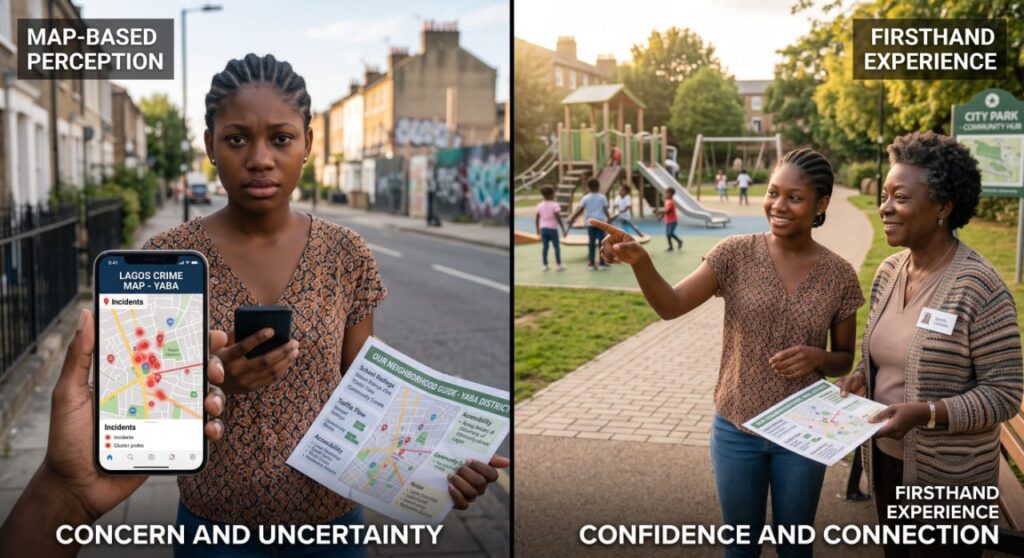
The first concern buyers raise is almost always safety. They want to know if the neighborhood is safe for their children, their belongings, and themselves. I learned not to dismiss this concern or offer vague reassurances like “It feels safe.” Instead, I provided data. I directed buyers to local crime mapping tools and neighborhood watch reports. I shared information about street lighting, traffic patterns, and community policing programs. I also invited them to visit at different times of day. A neighborhood that feels safe at noon might feel different at midnight. Letting them see for themselves was more powerful than anything I could say.
I also learned that safety is not just about crime. It is about the physical environment. Are the sidewalks well-maintained? Are there crosswalks near schools? Is the area walkable? Buyers with mobility challenges or young children care about these details. I started taking note of accessibility features in the neighborhood and sharing them proactively. A curb cut near the corner, a park with paved paths, a bus stop with a bench. Those small details mattered to buyers more than I realized.
The second concern is school districts. For families with children, this is often the deciding factor. I learned to have school data ready before the first showing. I gathered information about test scores, student-teacher ratios, extracurricular activities, and graduation rates. I also shared insights about school culture and parent involvement. Data alone does not tell the whole story. A school with slightly lower test scores might have a stronger arts program or a more supportive community. I helped buyers see the full picture, not just the numbers.
I also learned to be honest about school boundaries. School district lines can change, and a home that is zoned for one school today might be rezoned tomorrow. I encouraged buyers to verify enrollment with the district directly. I did not want to make promises I could not keep. Transparency built trust, even when the news was not perfect.
The third concern is accessibility. This is often overlooked but critically important. Buyers may be thinking about aging parents, a family member with a disability, or their own future needs. I learned to highlight accessibility features proactively. A zero-step entry. Wider doorways. A first-floor bedroom and bathroom. Grab bars in the shower. These features are not just conveniences. They are necessities for some buyers.
I also learned to think about accessibility beyond the home itself. Can a wheelchair navigate the sidewalk? Is there a bus route nearby? How far is the nearest hospital or pharmacy? Buyers with accessibility needs are not just looking for a house. They are looking for a life that works for them. I started creating a simple one-page neighborhood guide that included these details. It was not fancy, but it was helpful.
One of the most important lessons I learned was to listen more than I talked. When a buyer raised a concern, I did not rush to defend the neighborhood or the home. I asked questions. What specifically are you worried about? What would make you feel more comfortable? What have you heard? Often, the concern was based on a rumor or a single negative review. By listening, I could address the real issue instead of the surface one.
I also learned to connect buyers with local experts. A police officer who knew the neighborhood. A parent from the local school. A neighbor who had lived there for decades. These people could answer questions in ways I could not. They provided authentic, lived experience. That was more convincing than any sales pitch.
Finally, I learned to accept that some concerns cannot be resolved. Some buyers will never feel comfortable with a busy street. Some will not be satisfied with the schools. Some will need a level of accessibility that the home cannot provide. In those cases, the best thing I could do was be honest. “This home may not be the right fit for your needs. Let me help you find something that is.” That honesty built trust, and that trust often led to referrals.
Addressing buyer concerns is not about overcoming objections. It is about understanding what matters to people and helping them make informed decisions. When you address safety, schools, and accessibility with data, transparency, and local expertise, you do not just sell a home. You build a relationship.
There is so much more to learn about guiding buyers through the selling process. Our website is filled with articles on neighborhood research, school data, and accessibility features. Head over and explore, because informed buyers make confident decisions.
References
U.S. Department of Housing and Urban Development. (n.d.). *Assistant secretary for fair housing and equal opportunity: HUD training on neighborhood crime data and school quality*. [https://www.hud.gov/sites/default/files/hudclips/documents/AS-Trainor](https://www.hud.gov/sites/default/files/hudclips/documents/AS-Trainor)’s-DCL-on-Neighborhood-Crime-Data-and-School-Quality.pdf
Homes.com. (2026, August 31). *Bus routes, walk zones and school commutes: What to research before buying*. [https://www.homes.com/learn/bus-routes-walk-zones-and-school-commutes-what-to-research-before-buying/](https://www.homes.com/learn/bus-routes-walk-zones-and-school-commutes-what-to-research-before-buying/)
Metes. (2026, June 9). *Fair housing language in MLS listings: 2026 reference*. [https://www.metes.app/learn/fair-housing-language-mls-listings](https://www.metes.app/learn/fair-housing-language-mls-listings
National Association of REALTORS®. (2025, March 11). *Consumer guide: Marketing your home*. [https://www.nar.realtor/the-facts/consumer-guide-marketing-your-home](https://www.nar.realtor/the-facts/consumer-guide-marketing-your-home)
Realtor.com. (2025, August 21). *The secret rules of school-zone homes every buyer must know*. [https://www.realtor.com/advice/buy/school-zone-homes-value-rules/](https://www.realtor.com/advice/buy/school-zone-homes-value-rules/)