
 Posted by
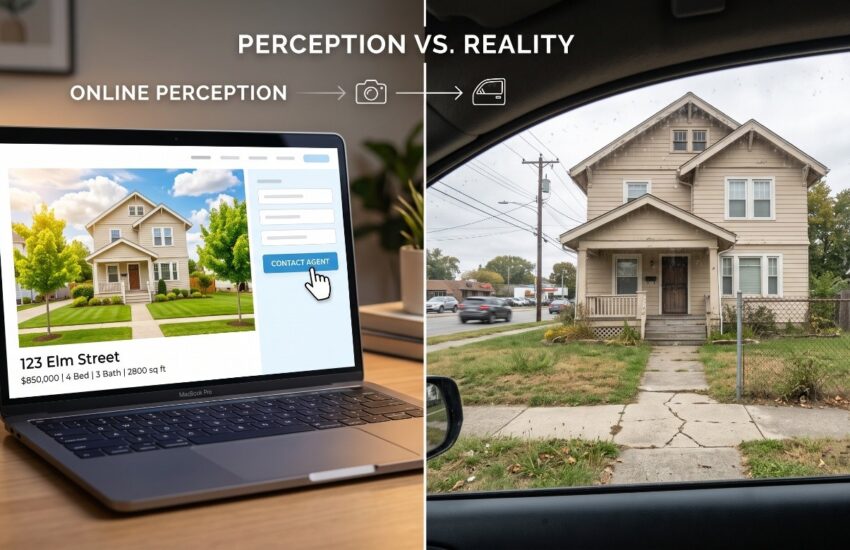
 I found my dream home on a real estate website at midnight. The photos were stunning. The price was right. The neighborhood looked perfect on the map. I was ready to make an offer before I even stepped foot inside. Then my agent gently reminded me that the listing had been on the market for six months, the photos were five years old, and the “quiet street” was actually a busy cut-through. The internet had given me information. It had not given me truth.
Online resources have fundamentally transformed how people research and buy homes. According to the National Association of Realtors, 96% of buyers now use the internet during their home search. They browse listings on Zillow, Redfin, and Realtor.com. They research neighborhoods on Google Maps. They check school ratings on GreatSchools. They read reviews of agents and lenders. The internet has democratized information in ways that benefit buyers enormously.
But information is not the same as wisdom. And access is not the same as accuracy. I learned this the hard way.
The first issue is accuracy. Online listings are only as reliable as the data that feeds them. Square footage can be wrong. School boundaries can be outdated. Property tax estimates can be off by thousands of dollars. One study found that listing prices on major websites were inaccurate up to 36% of the time. I learned to verify everything. I cross-referenced tax records. I called the school district directly. I asked my agent to pull the actual MLS data. The internet gave me a starting point. It did not give me the final answer.
The second issue is timing. Online listings are often delayed. By the time a property appears on Zillow, it may have already been on the MLS for days. In a competitive market, those days matter. I learned to set up instant alerts on multiple platforms and to work with an agent who had direct access to the MLS. The best properties sometimes sell before they ever appear on public sites.
The third issue is missing context. A photo can make a small room look large. A wide-angle lens can distort proportions. A map can make a neighborhood look walkable when it is not. A crime map can look terrifying when the actual risk is low. I learned to visit in person, at different times of day. I learned to talk to neighbors. I learned to trust my feet on the ground more than my eyes on a screen.
The fourth issue is information overload. There are hundreds of websites, apps, and tools competing for my attention. I could spend hours reading reviews, comparing estimates, and watching market analysis videos. At some point, more information becomes paralysis. I learned to choose a few trusted sources and ignore the rest. My agent, my lender, and one or two reliable websites were enough.
The fifth issue is the illusion of expertise. Online resources can make buyers feel like they know more than they do. A few hours of research does not replace years of experience. I learned to ask questions rather than assume. I learned to listen to professionals who had walked this path before. The internet gave me vocabulary. It did not give me judgment.
That said, online resources are invaluable when used correctly. I used them to educate myself about the process. I used them to learn about mortgage options and first-time buyer programs. I used them to research neighborhoods and compare school districts. I used them to track market trends and understand pricing. I used them to read reviews and vet professionals. The internet made me a smarter, more informed buyer.
The key is balance. Use online resources to prepare. Use them to ask better questions. Use them to identify options. But do not let them replace the human experts who can provide context, experience, and advocacy. Do not let them replace your own eyes and feet.
My agent was not replaceable. My lender was not replaceable. The inspector who found the foundation issue that no website had mentioned was not replaceable. The internet was a tool. They were the team.
If you are buying a home, use the internet wisely. Set up alerts. Do your research. Verify everything. But then get off the couch. Visit the neighborhoods. Walk the streets. Talk to people. Trust your gut. And work with professionals who can fill the gaps that data leaves behind.
There is so much more to learn about navigating the home buying process in the digital age. Our website is filled with articles on online tools, working with agents, and making informed decisions. Head over and explore, because the best decisions are made with both information and wisdom.
References
Consumer Financial Protection Bureau. (2026, June 15). *Buying a house*. [https://www.consumerfinance.gov/owning-a-home/](https://www.consumerfinance.gov/owning-a-home/
National Association of REALTORS®. (2013). *The digital house hunt: Consumer and market trends in real estate*. [https://www.nar.realtor/sites/default/files/Study-Digital-House-Hunt-2013-01.pdf](https://www.nar.realtor/sites/default/files/Study-Digital-House-Hunt-2013-01.pdf)
Pew Research Center. (2008, May 17). *The internet and consumer choice*. [https://www.pewresearch.org/internet/2008/05/18/the-internet-and-consumer-choice/](https://www.pewresearch.org/internet/2008/05/18/the-internet-and-consumer-choice/)
Consumer Financial Protection Bureau. (2015, January 12). *Nearly half of mortgage borrowers don’t shop around when they buy a home*. [https://www.consumerfinance.gov/archive/blog/nearly-half-of-mortgage-borrowers-dont-shop-around-when-they-buy-a-home/](https://www.consumerfinance.gov/archive/blog/nearly-half-of-mortgage-borrowers-dont-shop-around-when-they-buy-a-home/)
Consumer Financial Protection Bureau. (2026, July 15). *Housing*. [https://www.consumerfinance.gov/housing/](https://www.consumerfinance.gov/housing/)
Consumer Financial Protection Bureau. (2026). *Your home loan toolkit: A step-by-step guide*. [https://files.consumerfinance.gov/f/documents/cfpb_your-home-loan-toolkit_print_2026-08.pdf](https://files.consumerfinance.gov/f/documents/cfpb_your-home-loan-toolkit_print_2026-08.pdf)
ListWithClever. (2026, August 24). *Best home-buying websites*. [https://listwithclever.com/best-home-buying-websites/](https://listwithclever.com/best-home-buying-websites/